 blog
blog
Hiring Reliable Drainage Contractors: A 2026 Guide
Table of Contents
- What Reliable Drainage Contractors Actually Do
- Questions to Ask a Drainage Contractor Before You Hire
- How to Compare Drainage Contractor Estimates
- Drain Tile Installation and Repair: What You Need to Know
- Perimeter Drain Repair and Underground Drainage Solutions
- Red Flags and Warning Signs of Unreliable Contractors
- Licensing, Insurance, and Local Code Requirements
- Conclusion
- Frequently Asked Questions
Last Updated: October 9, 2026
What Reliable Drainage Contractors Actually Do
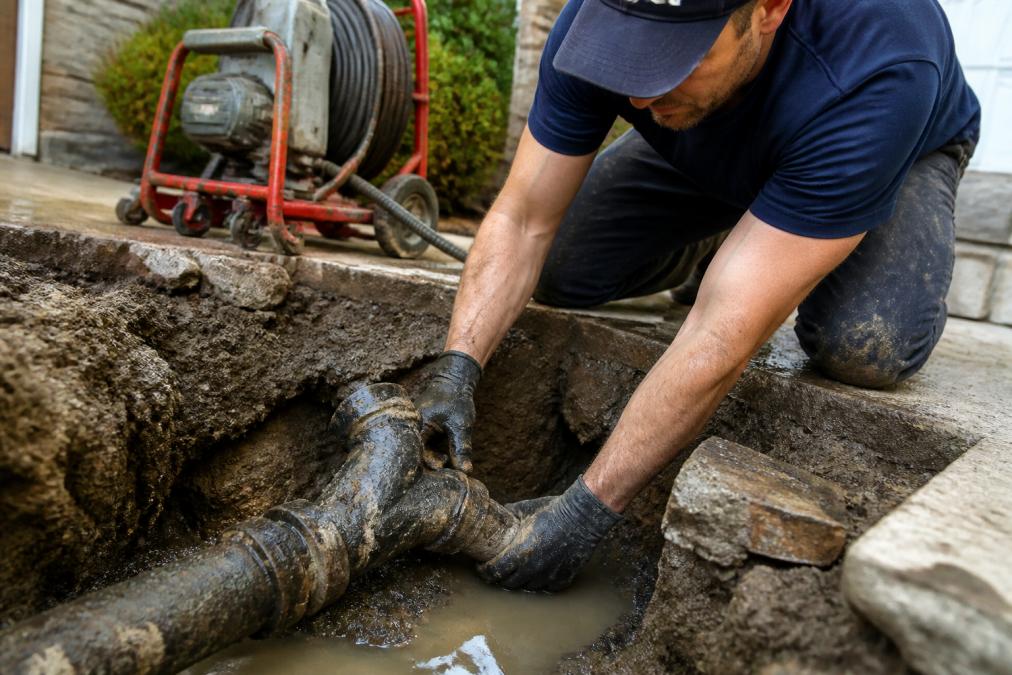
A reliable drainage contractor handles far more than just clearing a blocked pipe. They diagnose underground drainage problems, install and repair drain tile systems, manage sump installations, and address sewer line issues before they become catastrophic. At DrainageBusters, we work with homeowners to solve drainage challenges that protect property foundations and prevent wet basements. Our professional team expertly handles drain tile installation, wet basement remediation, and comprehensive sewer repair, protecting your property's structural integrity with reliable, high-quality results.
The best drainage contractors combine field expertise with proper diagnosis. They don't simply recommend solutions; they explain what's happening beneath your property and why a specific approach makes sense for your situation. This might involve drain tile installation for perimeter drainage, concrete drain repair, or comprehensive sewer solutions depending on what your property needs.
Most homeowners don't think about drainage until water appears in their basement or yard pooling becomes impossible to ignore. By then, the problem has usually been developing for months or years. A professional drainage contractor catches these issues early through proper inspection and assessment, saving you from expensive emergency repairs down the road.
Questions to Ask a Drainage Contractor Before You Hire
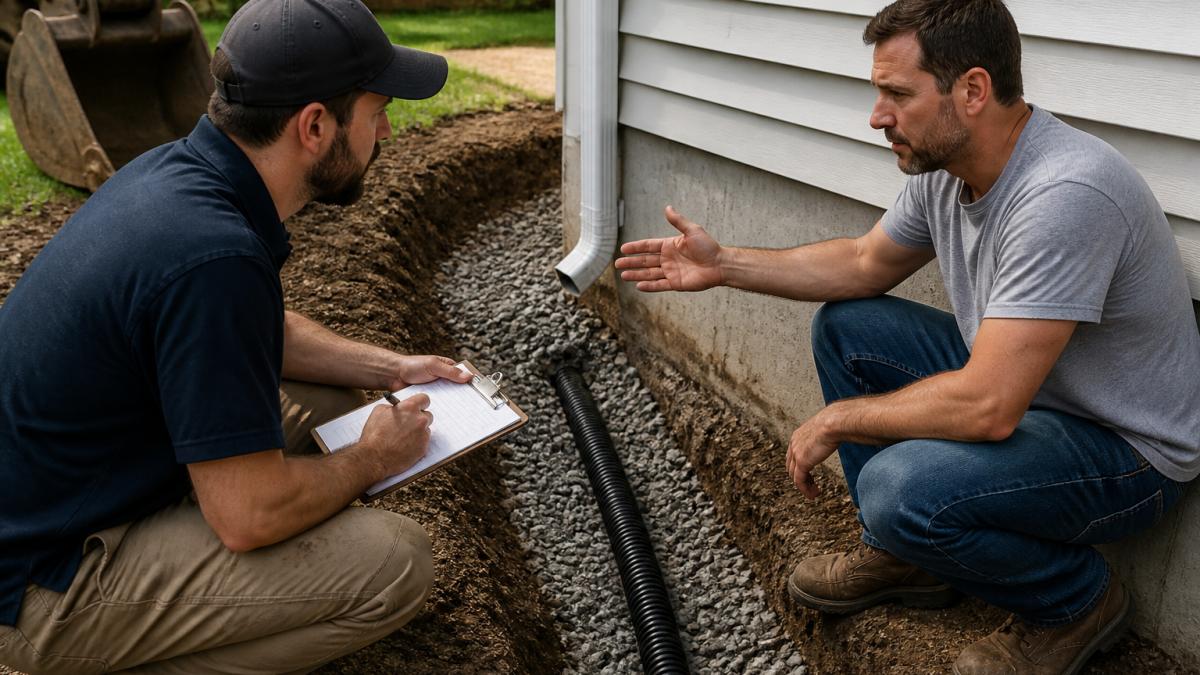
Before signing any contract, ask these specific questions that separate thorough professionals from contractors cutting corners.
What diagnostic methods will you use to assess my drainage problem? A contractor worth hiring will explain whether they'll use video inspection, soil testing, or other diagnostic tools. They should describe exactly what they're looking for and how they'll determine the root cause.
Can you provide references from similar projects completed in the last two years? Ask specifically for projects with comparable drainage challenges. A reliable contractor will have recent local references and encourage you to contact them. If they hesitate or offer only old references, reconsider.
What permits and inspections are required for this work? Legitimate contractors understand local building codes and permit requirements. They should explain what inspections will be needed and who's responsible for obtaining permits. If they suggest skipping permits to save money, walk away immediately.
Will you provide a written estimate that breaks down labour, materials, and timeline? Professional estimates include itemized costs, a clear project schedule, and what's included or excluded.
What warranty or guarantee do you offer on completed work? Reputable contractors stand behind their installations. They should explain warranty coverage on materials, labour, and the drainage solution itself. Understand exactly what's covered and for how long.
How to Compare Drainage Contractor Estimates
Getting multiple estimates is essential, but comparing them properly requires understanding what you're actually evaluating. Three contractors might quote different prices for legitimate reasons, or one might be cutting corners to appear cheaper.
Request estimates in the same format from all contractors. Ask each one to provide a detailed breakdown covering the same scope of work. If one estimate includes drain tile installation plus waterproofing and another only includes drain tile, you're not comparing apples to apples.
Look for cost justification, not just the bottom number. The cheapest estimate isn't automatically the best deal. A contractor who quotes significantly lower might be using inferior materials, planning to cut the project short, or underestimating the work involved.
Check what's included in labour costs. Some contractors price excavation, site restoration, and cleanup separately. Others bundle everything. Make sure you're comparing total project cost, not just the core drainage work.
Verify timeline commitments in writing. Estimates should include a realistic project schedule and what factors might extend it (weather, unexpected soil conditions, permit delays).
Ask about payment terms and deposit requirements. Legitimate contractors typically ask for a deposit to secure materials and labour, then schedule payment milestones as work progresses. Avoid anyone demanding full payment upfront or offering suspiciously easy financing terms.
| Estimate Element | What to Look For | Red Flag |
|---|---|---|
| Breakdown | Itemized labour, materials, equipment | Vague "materials" or "labour" lines |
| Timeline | Specific start/end dates, weather contingencies | "Call for schedule" or no end date |
| Warranty | Written coverage terms and duration | No warranty mentioned |
| Payment | Clear deposit and milestone schedule | Full payment required upfront |
| References | Recent local projects with contact info | No references or outdated ones |
Drain Tile Installation and Repair: What You Need to Know
Drain tile installation is one of the most common solutions for managing water around your home's foundation. Understanding what it involves helps you evaluate whether it's the right fix for your property.
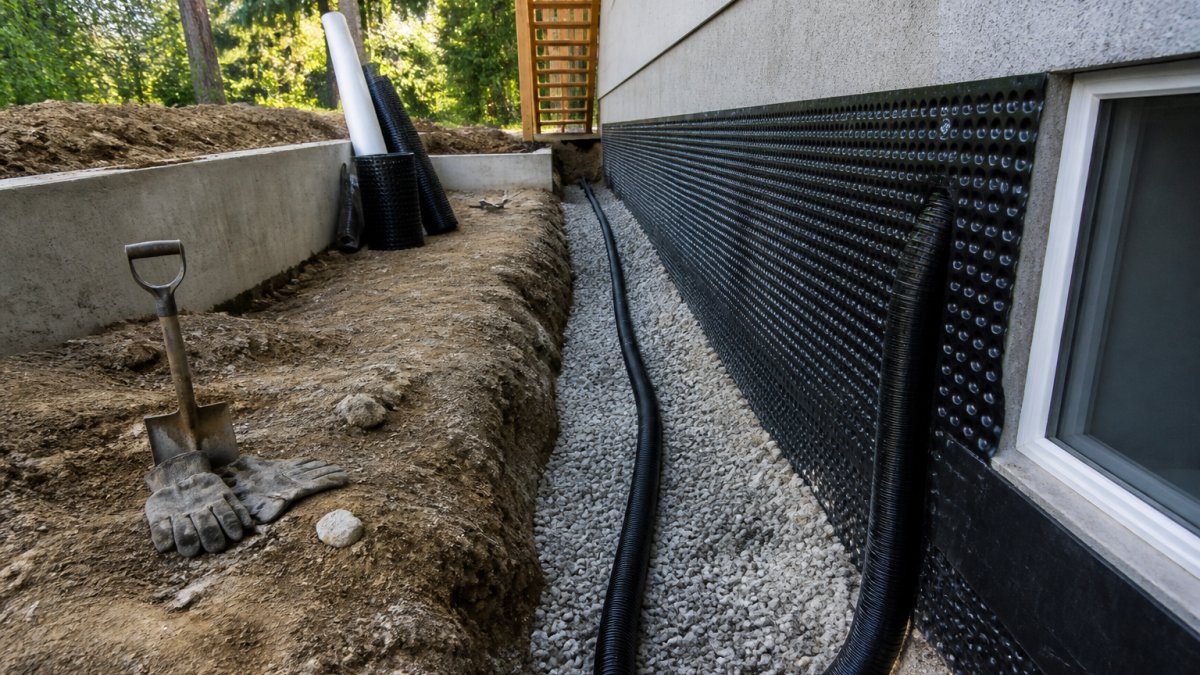
Drain tile (also called perimeter drain or foundation drain) is a system of underground pipes installed around your foundation's perimeter. These pipes collect groundwater and direct it away from your basement, preventing it from seeping through foundation walls. Installation typically involves excavating around the foundation, laying perforated pipe in a gravel bed, and backfilling with soil. The system channels water to either a sump pump system or daylight drainage if your property slopes appropriately.
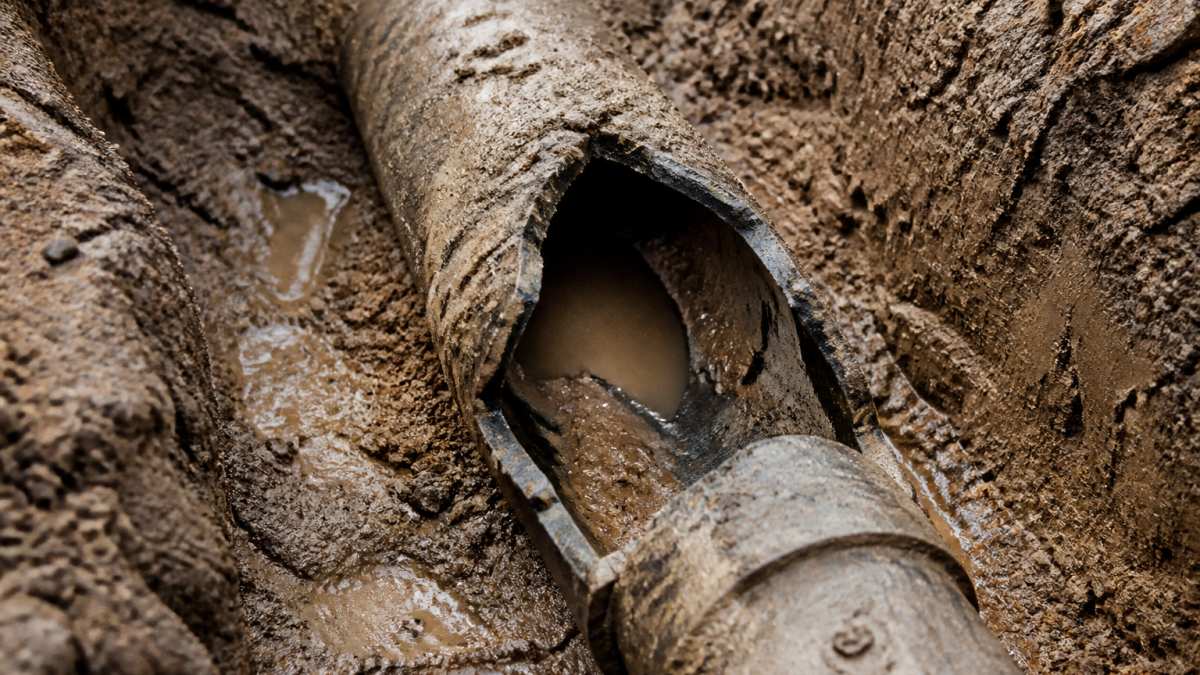
Drain tile repair becomes necessary when existing systems fail, usually because pipes have cracked, become clogged with sediment, or were installed incorrectly in the first place. A reliable drainage contractor will diagnose the specific failure point through video inspection before recommending repair versus replacement.
When drain tile installation is necessary:
- Your basement floods during heavy rain or spring snowmelt
- You have persistent dampness or moisture along foundation walls
- Your property has clay soil that doesn't drain naturally
- You're experiencing foundation settling or cracking related to water pressure
What the installation process involves:
- Excavating around the foundation perimeter (typically 1-1.5 meters deep)
- Inspecting the foundation for existing damage
- Laying perforated drain pipe in a gravel bed
- Installing or upgrading sump pump systems if needed
- Backfilling and restoring the landscaping
The timeline for drain tile installation depends on your home's size and soil conditions, but most residential projects take 5-10 working days. Your yard will experience disruption during excavation, so plan accordingly if you have landscaping, deck structures, or underground utilities in the work area.
Perimeter Drain Repair and Underground Drainage Solutions
Perimeter drain systems fail for specific reasons, and understanding the failure mode helps you understand the repair scope and cost implications.
Common perimeter drain failures include:
- Pipe collapse from soil pressure or settling
- Sediment and root infiltration clogging the system
- Improper original installation with inadequate slope or gravel
- Disconnected pipes or missing sections
- Sump pump failure preventing water discharge
When your perimeter drain isn't working properly, water that should be diverted away from your foundation instead accumulates and creates hydrostatic pressure against basement walls. This pressure forces water through cracks and porous concrete, resulting in wet basements.
A drainage contractor should diagnose the specific problem before recommending a solution. Video inspection of the drain tile reveals blockages, cracks, and structural issues. Once the problem is identified, repair options range from cleaning and flushing the existing system (for sediment clogs) to partial or complete replacement (for structural failure).
Underground drainage solutions extend beyond perimeter drains. Some properties benefit from interior drainage systems that collect water inside the basement and pump it out, French drains that intercept surface water before it reaches the foundation, or comprehensive waterproofing that combines multiple approaches. The right solution depends on your property's drainage challenges, soil type, and water table conditions.
Red Flags and Warning Signs of Unreliable Contractors
Certain patterns in how contractors operate, communicate, and estimate their work signal that they're not trustworthy. Recognizing these red flags early saves you from hiring someone who'll cut corners or disappear mid-project.

They won't provide written estimates or references. A professional contractor documents everything in writing.
They pressure you to decide immediately or offer "today only" discounts. High-pressure sales tactics indicate the contractor is more focused on closing the deal than delivering quality work.
They can't or won't explain their process clearly. A reliable contractor describes their approach in detail: what they'll do, why they're doing it, what equipment they'll use, and how they'll minimize disruption to your property.
They have no verifiable license, insurance, or business registration. Before hiring anyone, verify their credentials independently.
They suggest skipping permits or inspections to save money. Permits and inspections exist to protect you and ensure work meets building codes.
They won't provide a warranty or guarantee on completed work. Contractors who stand behind their work offer written warranties. If someone refuses to guarantee their labour or materials, question why.
Licensing, Insurance, and Local Code Requirements
Hiring a licensed, insured contractor protects both you and your property. Understanding what credentials matter and how to verify them prevents expensive mistakes.
In British Columbia, drainage contractors performing work that affects building structure or safety must be licensed. The specific license type depends on the scope of work; some work requires a general contractor license, other work might require a plumbing or excavation specialist license.
Insurance is equally critical. A contractor should carry liability insurance (protecting you if their work damages your property or a neighbour's) and workers' compensation coverage (protecting their employees). Ask to see proof of current insurance and verify the coverage limits are adequate for your project.
Local building codes govern how drainage work must be performed. These codes specify minimum pipe sizes, proper slope for gravity drainage, sump pump capacity, and inspection requirements. A knowledgeable contractor understands these requirements and plans their work accordingly. If they seem unfamiliar with local codes or suggest working around them, that's a warning sign.
Permits are required for most significant drainage work, including drain tile installation, sump system installation, and foundation repairs. The contractor should either handle permit applications or clearly explain that you're responsible for obtaining them. Work performed without required permits can create issues when you sell your property and may violate local bylaws.
Conclusion
Hiring a reliable drainage contractor means prioritizing credentials, getting detailed written estimates, asking the right diagnostic questions, and recognizing warning signs before you commit. The responsibility falls on you to verify licensing, insurance, and references independently.
When you're ready to address drainage challenges at your property, DrainageBusters offers specialized drainage, waterproofing, and sewer solutions. Our team provides free estimates and handles drain tile installation, wet basement remediation, and comprehensive sewer repair with professional expertise. Call us at (778) 320-4013 to discuss your drainage needs and get a detailed assessment from contractors who understand the specific challenges of your property.
Frequently Asked Questions
What should I ask a drainage contractor before hiring them?
Ask about their licensing and insurance, experience with drain tile installation and repair, whether they'll inspect your property before quoting, and what warranty or guarantee they offer. Request references from recent local projects and clarify the project timeline, disruption to your yard, and what the estimate includes. Ask how they handle unexpected issues and whether they're available for emergency drainage repairs.
How can I compare drainage contractor estimates?
Request written estimates from multiple contractors that detail the scope of work, materials, labour costs, timeline, and warranty. Ensure each estimate addresses the same problem; some may recommend drain tile installation while others suggest sump systems or exterior drainage solutions. Don't automatically choose the lowest bid; compare what's included and verify that contractors are licensed and insured before making your decision.
What are common red flags when hiring a drainage contractor?
Avoid contractors who quote over the phone without inspecting your property, pressure you to decide immediately, won't provide references, lack proper licensing or insurance, or guarantee results that seem unrealistic. Be cautious of unusually low estimates, contractors who can't explain their recommendations clearly, or those unwilling to provide a written estimate. Trust your instincts if something feels off about their communication or professionalism.
How long does drain tile installation and repair typically take?
Project duration depends on the scope; perimeter drain repair or drain tile installation can range from a few days to several weeks depending on yard size, soil conditions, and whether excavation is needed. Licensed technicians should provide a realistic timeline in their written estimate. Ask about disruption to your property and whether they'll restore your yard after work is complete.