 ultimate-guide
Signs of Failing Perimeter Drains: A 2026 Guide
Table of Contents
- What Is a Perimeter Drain (Weeping Tile)?
- Common Signs of Failing Perimeter Drains
- Why Perimeter Drains Fail: Root Causes
- Drain Tile Camera Inspection: How It Works
- Signs of Water Damage in Basement
- Perimeter Drain Replacement Cost and Factors
- When to Call a Professional Plumber
- Preventative Maintenance for Foundation Drainage
- Frequently Asked Questions
Last Updated: September 27, 2026
What Is a Perimeter Drain (Weeping Tile)?
A perimeter drain, also called a weeping tile or foundation drain, is a subsurface drainage system installed around your home's foundation to manage groundwater and prevent water infiltration into your basement. It consists of perforated pipe, traditionally clay or cement tiles, now usually plastic, laid in gravel around the foundation's perimeter at or below the footing level.
The pipe collects water and channels it away from your foundation toward a sump pump, storm drain, or daylight outlet. Without a functioning system, hydrostatic pressure forces water through foundation cracks and joints.
Homes built before the 1980s typically use cement segmental tiles, prone to degradation. Modern systems use PVC or plastic pipe, which resist root intrusion and sediment buildup more effectively.
Common Signs of Failing Perimeter Drains
Interior warning signs
Water in your basement is the most obvious indicator of drainage failure, but signs of failing perimeter drains often start subtly before standing water appears.
Watch for these interior warning signals:
-
Damp patches on basement walls or floors indicate groundwater pressure is overcoming your drainage system's capacity, often appearing in corners where water collects.
-
Musty, moldy odors signal moisture accumulation when water bypasses your perimeter drain and sits against the foundation.
-
Efflorescence on foundation walls, white, chalky salt deposits, indicate water is moving through the foundation and evaporating on the surface.
-
Visible mold or mildew growth on basement walls, especially near the floor, shows persistent moisture from a failing perimeter drain.
-
Slow-draining water in basement floor drains indicates your perimeter drain isn't directing water away fast enough.
-
Cracks in basement walls that leak indicate hydrostatic pressure is pushing water through structural gaps.
Exterior indicators
Look for these outdoor warning signals:
-
Water pooling around the foundation means water isn't being directed away properly, overwhelming a failing drainage system.
-
Soggy or unusually green patches of lawn near the foundation indicate concentrated water that should be moving away through your perimeter drain.
-
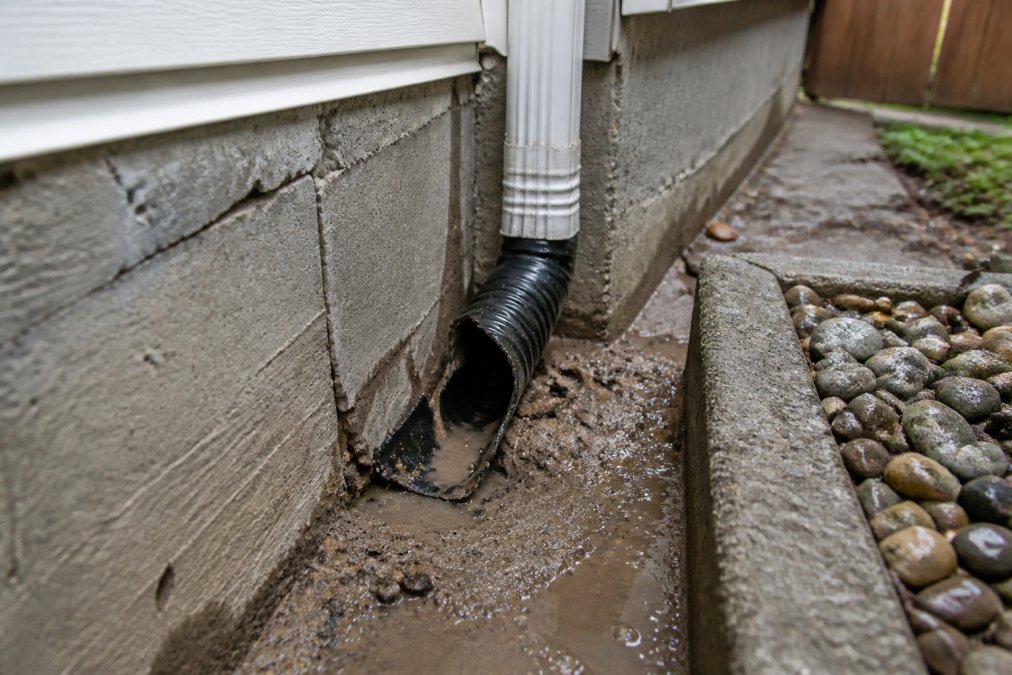
Visible downspout discharge near the foundation adds thousands of gallons of water annually, stressing your perimeter drain system.
-
Cracks or settling in the foundation exterior result from water pressure and soil erosion; a failing drainage system worsens these conditions.
-
Exposed or deteriorated drain tile should be inspected for breaks, displaced joints, or sediment accumulation. Older cement tiles are especially vulnerable to joint separation.
Why Perimeter Drains Fail: Root Causes
Sediment and debris accumulation gradually clogs the system, especially in clay-heavy soils where fine particles migrate easily.
Root intrusion from nearby trees can penetrate drain tile joints and block the pipe within 10-15 years, especially in older cement tiles.
Joint displacement and pipe collapse occur when ground settling, freeze-thaw cycles, and soil movement displace joints or collapse the pipe under pressure.
Soil saturation and hydrostatic pressure from rising water tables or heavy rainfall can overwhelm marginal drainage systems, accelerating basement seepage.
Downspout discharge and soil erosion from water directed against the foundation overwhelm the perimeter drain and create infiltration pathways.
Age and material degradation cause cement tiles to deteriorate over 40-50 years, with homes from the 1960s or earlier at high risk.
Drain Tile Camera Inspection: How It Works
A drain tile camera inspection uses a waterproof video camera to examine your perimeter drain pipe's interior without excavation.
Here's what the inspection process involves:
Initial access, A technician locates the perimeter drain and uses existing cleanouts or creates access points to insert the camera.
Camera insertion and movement, The camera travels the full drainage system length while the technician monitors the video feed in real time.
Documentation of damage, The technician records specific areas where the pipe shows cracks, joint displacement, sediment buildup, root intrusion, or collapse. Each problem is noted with location information so you understand the scope of damage.
Report and recommendations, You receive a detailed report with still images from the video, showing exactly where problems exist. The technician recommends repair or replacement based on the severity and extent of damage.
This inspection costs significantly less than excavation and provides concrete evidence of your drainage system's condition. If your basement has experienced water intrusion or you suspect drainage problems, a camera inspection is often the first step toward a solution.
Signs of Water Damage in Basement
Water damage in your basement tells the story of a drainage system failure. Recognizing these signs early prevents structural damage and mold growth.
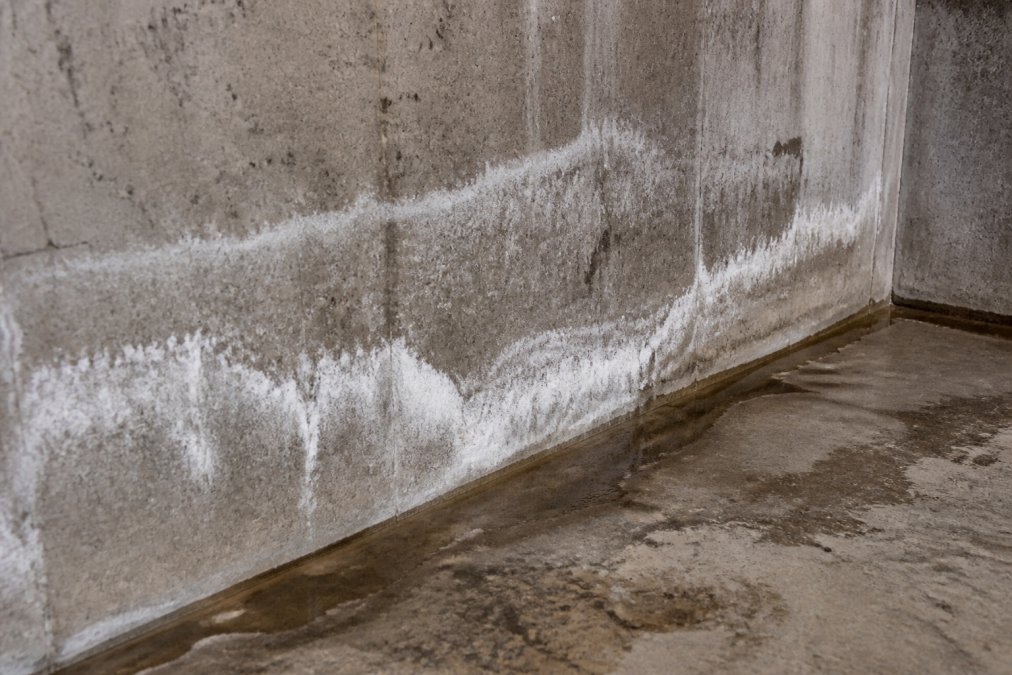
Efflorescence and mineral deposits, White, chalky buildup on foundation walls indicates water has moved through the concrete and evaporated on the surface, leaving mineral salts behind. This is one of the earliest visible signs of water infiltration. According to Inspect Canada's 2026 home inspection data, efflorescence on foundation walls is among the most frequently identified indicators of perimeter drain failure in older homes.
Active water seepage, Water actively dripping or seeping from foundation cracks, wall-floor joints, or around pipe penetrations shows hydrostatic pressure is forcing water through your foundation. This requires immediate attention before structural damage occurs.
Staining and discoloration, Brown, rust-colored, or dark stains on basement walls indicate water has been present long enough to leave mineral deposits or promote mold growth. These stains often appear in bands that show the highest water level reached.
Mold and mildew growth, Black or greenish growth on basement walls, especially in corners and along the floor, develops in persistently damp conditions. Mold indicates your basement has been wet for extended periods, long enough for spores to establish and grow.
Rust stains on concrete or framing, Orange or brown discoloration on steel beams, fasteners, or concrete indicates water has been present long enough to oxidize metal components. This signals both water infiltration and potential structural weakening.
Deteriorated or spalling concrete, Concrete that's flaking, pitting, or breaking apart shows water damage has progressed beyond surface-level issues. Freeze-thaw cycles combined with water infiltration cause concrete to fail structurally.
Warped or rotted wood framing, If your basement includes wood framing or joists, water damage causes wood to swell, warp, and eventually rot. This is a serious structural concern that requires professional assessment.
Perimeter Drain Replacement Cost and Factors
Replacing a failing perimeter drain is a significant project, and costs vary widely based on multiple factors. Rather than estimating a specific range, focus on understanding what drives costs so you can make informed decisions.
Factors affecting replacement cost:
-
Linear footage of drainage system, The total length of perimeter drain around your foundation determines labor and material requirements. A larger home or complex foundation shape requires more pipe and excavation work.
-
Excavation depth and difficulty, Deeper drainage systems or those in difficult soil conditions require more labor and equipment. Rocky soil, clay, or contaminated soil increases excavation costs.
-
Accessibility and existing landscaping, Mature trees, patios, driveways, or other structures near the foundation complicate excavation and may require removal and restoration. Accessible, open yards cost less to work on.
-
Pipe material selection, Modern PVC or plastic pipe costs less than specialty materials. The choice between gravity drain, sump pump discharge, or daylight outlet affects total system cost.
-
Additional work requirements, If your foundation has cracks requiring repair, if waterproofing membranes need installation, or if interior basement finishing must be protected, these add to the total project cost.
-
Soil composition and drainage conditions, Clay soil requires more gravel bedding and filtration fabric than sandy soil. Poor drainage conditions may require additional measures like sump pump installation.
Rather than guessing at costs, the best approach is to contact a professional drainage company for a free estimate. A qualified technician can assess your specific situation and provide accurate pricing based on your home's actual conditions.
When to Call a Professional Plumber
Certain drainage problems require professional expertise. Knowing when to call a plumber prevents costly damage and ensures the work is done correctly.
Call a professional immediately if:
You've noticed active water seeping into your basement, especially if the water appears during or shortly after heavy rain. This indicates your perimeter drain is completely overwhelmed or non-functional.
You see visible cracks in your foundation walls with water actively seeping through them. This indicates structural stress from hydrostatic pressure, a problem that worsens rapidly without intervention.
You've detected mold growth in your basement. Mold indicates persistent moisture and requires both drainage repair and professional mold remediation.
You notice foundation settling, cracking in your home's structure above grade, or doors and windows that no longer close properly. These signs suggest water damage and soil erosion around your foundation.
Your basement has flooded multiple times or experiences water intrusion during every heavy rain.
Why professional assessment matters:
Preventative Maintenance for Foundation Drainage
Regular maintenance extends your perimeter drain's lifespan and catches problems before they cause water damage. Preventative action is far less expensive than emergency repairs.
Annual maintenance tasks:
Frequently Asked Questions
What are the most common signs of failing perimeter drains?
The most frequent warning signs include water pooling around your foundation, musty odors in the basement, visible efflorescence (white, chalky salt deposits) on foundation walls, damp patches on concrete, and slow-draining water around your property. Interior indicators like basement dampness, mold growth, and foundation cracks also signal drainage system problems. If you notice any combination of these, a professional inspection is warranted to prevent further structural damage.
How often should perimeter drains be inspected?
Industry best practice recommends annual inspections, particularly before the heavy rainfall season. Homes with older cement segmental tiles or those showing early warning signs should be inspected more frequently. Professional video camera inspection can identify issues before they cause visible damage. Regular maintenance checks help catch clogged drains, root intrusion, and sediment buildup before they compromise your foundation's structural integrity.
Can a failing perimeter drain cause basement flooding?
Yes. When perimeter drains fail, hydrostatic pressure builds around your foundation as groundwater accumulates. This pressure forces water through foundation cracks and wall seepage, leading to wet basements and flooding. Misaligned pipe joints, root intrusion, and sediment buildup are common mechanical causes that prevent proper water infiltration management. Professional drain tile installation or replacement restores your home's ability to handle subsurface drainage effectively.
What should I expect during a drain tile camera inspection?
A video camera inspection involves inserting a small camera into your drainage system to visually assess the condition of the pipe. This process identifies cracks, collapses, root intrusion, sediment accumulation, and joint misalignment without excavation. The camera footage provides a clear view of problem areas, helping professionals recommend targeted repairs or full replacement. This non-invasive method is more cost-effective than excavation and provides definitive evidence of drainage system failure.