 ultimate-guide
Drain Tile Installation Cost 2026: Complete Pricing Guide
Table of Contents
- What Drives Drain Tile Installation Cost in 2026
- Signs of Failing Drain Tile You Should Not Ignore
- Perimeter Drain Replacement Cost: What to Expect
- The Installation Process and Timeline
- Drain Tile System Maintenance Tips for Longevity
- Insurance, Warranties, and Long-Term ROI
- Frequently Asked Questions
Last Updated: September 16, 2026
What Drives Drain Tile Installation Cost in 2026
Drain tile installation cost 2026 depends on three variables: linear footage dug, whether the work is inside or outside the foundation, and what the soil does once opened. This guide from DrainageBusters breaks down each cost driver so you can budget with real numbers.
Interior vs. Exterior Systems: Pricing Differences
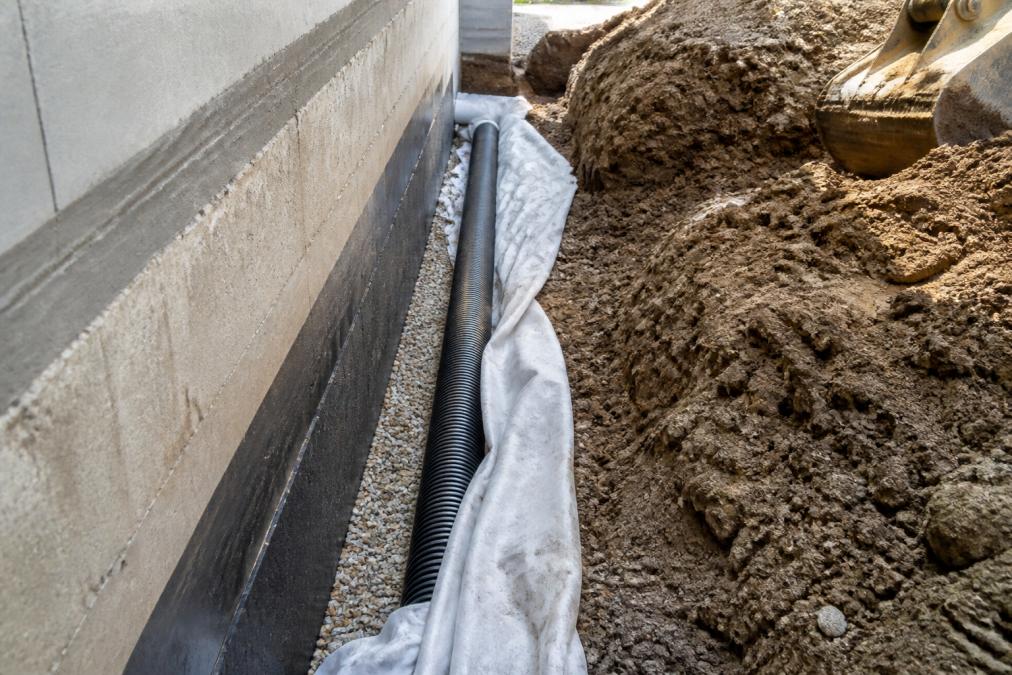
Exterior systems cost more because they require full excavation down to the footing, typically 1.8 to 2.4 metres deep. That means breaking concrete where needed, removing soil, laying gravel aggregate and filter fabric, and backfilling.
| Factor | Interior System | Exterior System |
|---|---|---|
| Excavation depth | Under slab only | 1.8-2.4 m to footing |
| Landscaping impact | Minimal | Significant |
| Typical lifespan | 20-30 years | 30-50 years |
| Best for | Finished basements, limited access | Failed exterior weeping tile, high water table |
Cost Breakdown: Materials, Labor, and Permits
Pricing depends on quantity, site access, and the condition of the existing drain, so the only reliable figure comes from a site inspection. DrainageBusters provides free estimates for exactly this reason: a phone quote is a guess, not a price.
The four cost buckets are consistent across every job:
- Materials, perforated drainage pipe, gravel aggregate, filter fabric, moisture barrier, and fittings.
- Labor, excavation, concrete breaking, pipe laying, and backfill.
- Disposal, hauling and tipping fees for excavated soil.
- Permits and restoration, municipal permits where required, plus landscaping reinstatement.
Signs of Failing Drain Tile You Should Not Ignore
The clearest sign of failing drain tile is water at the base of a foundation wall after heavy rain, especially when it recurs in the same spot. A damp patch that returns every wet season is not a coincidence.
Other signals worth acting on:
- Efflorescence, the white chalky deposit on concrete walls, which indicates moisture moving through the foundation wall.
- Musty odors in a basement that has never flooded visibly.
- Visible cracks widening seasonally as soil saturation changes.
- A sump pump running constantly, or running less than it used to.
Perimeter Drain Replacement Cost: What to Expect
Perimeter drain replacement cost tracks closely to drain tile installation cost 2026 figures, because replacement means the same excavation and materials plus removal work. The old pipe must come out before the new system goes in.
Factors That Increase Replacement Costs
Replacement quotes climb for predictable reasons. Knowing them in advance prevents mid-project surprises.
- Depth to footing. Deeper foundations mean more excavation and more shoring.
- Access. A foundation wall behind a deck, driveway, or mature tree costs more to reach.
- Soil composition. Clay-heavy soil drains poorly and often requires additional gravel aggregate and a wider trench. Sandy or rocky soil changes how the trench must be shored.
- Concrete thickness. Thicker basement slabs or foundation walls take longer to break.
- Unexpected foundation repair. Once the trench is open, a contractor may find cracks or compromised footing that need addressing before backfill.
The Installation Process and Timeline
A typical residential drain tile installation takes three to seven working days for an exterior system, or two to four days for an interior system, depending on linear footage and access. That covers the drainage work itself; permits, utility locates, and landscaping restoration can add calendar time around the excavation.
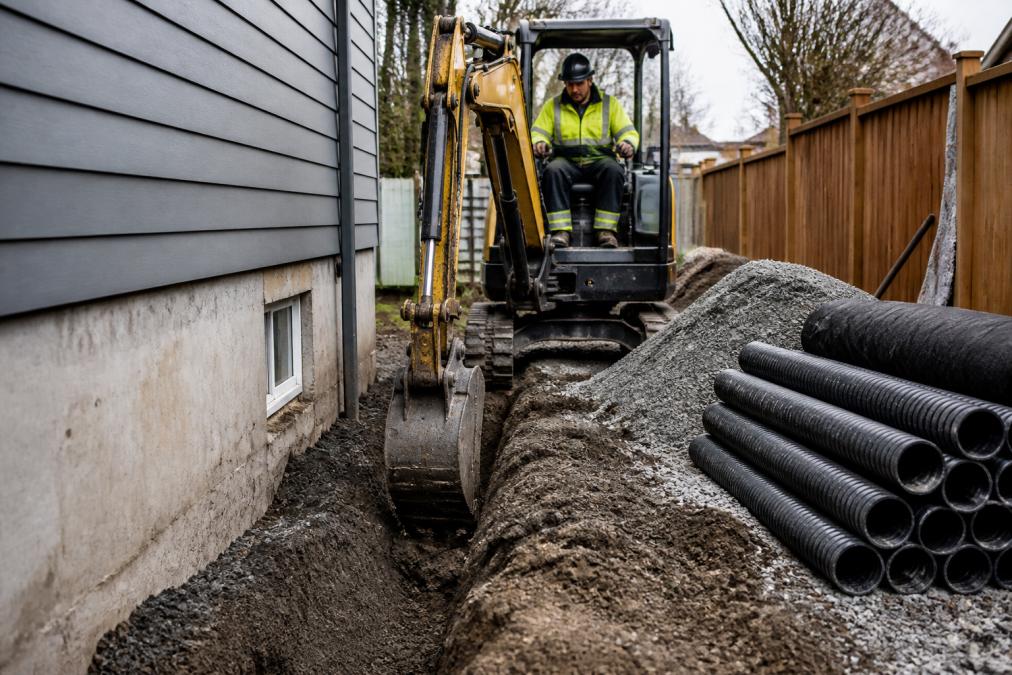
The sequence is consistent:
- Foundation inspection and marking of the trench line.
- Utility locates for gas, electrical, water, and telecom lines before any digging begins. This is a legal requirement in most jurisdictions and a common source of delay.
- Excavation down to the footing, with soil stockpiled or hauled away.
- Trench preparation, grading to establish the correct drainage slope toward the discharge point.
- Pipe and gravel installation, perforated pipe laid on gravel aggregate, wrapped in filter fabric to keep fines out.
- Backfill in compacted lifts, with a moisture barrier against the foundation wall.
- Discharge connection to a sump pump, storm connection, or daylight outlet.
- Restoration of landscaping and hard surfaces.
The Hidden Costs Competitors Bury in a Single Line
Most quotes show a single "restoration" line. In practice, exterior drain tile work touches several cost centers homeowners do not anticipate:
- Disposal and tipping fees. Excavated soil is classified as fill or contaminated material depending on site history. Clean fill is cheaper to dump; soil with hydrocarbons or heavy metals requires special handling. A typical exterior job removes several cubic metres of soil, and hauling can run into the low thousands depending on distance to the nearest licensed facility.
- Landscaping reinstatement. Sod, garden beds, walkways, decks, and irrigation lines that sit over the trench must be removed and rebuilt. A simple lawn reseed is inexpensive; rebuilding a paver walkway or replacing a mature shrub is not. Ask for a restoration allowance as a separate line item so you can compare quotes honestly.
- Permits and inspections. Many municipalities require a plumbing or drainage permit for the discharge connection, and some require a separate right-of-way permit if the discharge crosses a municipal easement. Permit fees vary widely, and inspection scheduling can add days to the timeline.
- Concrete cutting and patching. Interior systems require cutting a channel through the basement slab and patching it afterward. The patch is cosmetic, but it is labor and material that shows up on the invoice.
How Soil Composition Changes the Job
Soil is the most under-discussed cost driver in drain tile work, and where site-specific design separates a system that lasts from one that fails early.
- Clay-heavy soil drains poorly and holds water against the foundation. Contractors often need a wider trench, more gravel aggregate, and a heavier filter fabric to prevent fines from clogging the perforated pipe. In some cases, a drainage layer of washed stone is added above the pipe to improve flow.
- Sandy soil drains quickly but is unstable in an open trench. Shoring or sloping requirements add labor and can slow excavation.
- Rocky or shale-heavy soil may require a hydraulic breaker or rock saw, which is a separate equipment charge and can double excavation time on a short run.
- High water table sites may need dewatering during the dig, which means pumps, hoses, and additional labor.
Sump Pump Integration and Additional Costs
Sump pump integration adds cost to any drain tile project and is rarely optional: the drain collects water, the sump pump gets it out of the building.
Drain Tile System Maintenance Tips for Longevity
Drain tile system maintenance tips come down to keeping water flowing and debris out. A well-installed system lasts decades; a neglected one can clog within a few years.
- Clear gutters and downspouts every spring and fall so roof water discharges well away from the foundation.
- Keep the discharge point clear of leaves, ice, and yard waste.
- Test the sump pump quarterly by pouring water into the pit and confirming it activates and drains.
- Avoid planting deep-rooted trees or shrubs within a metre of the drain line.
- Have the system inspected every two to three years, and after any major flooding event.
Insurance, Warranties, and Long-Term ROI
Home insurance typically does not cover drain tile failure itself, because it is classified as a maintenance issue rather than a sudden event. Coverage may respond to resulting water damage in some policies, but read your own policy wording rather than assume: many cover interior damage from a sudden pipe burst while excluding the gradual seepage a failing perimeter drain causes over months.
- Workmanship warranty length and what voids it. The length of a workmanship warranty matters less than what triggers a claim.
- Product warranty on the pipe and pump, and whether it is transferable if you sell. A transferable warranty is a small but real selling point.
- Exclusions, most warranties exclude damage caused by root intrusion, lack of maintenance, or modifications by another contractor.
The ROI Case: What a Documented System Does at Sale Time
On long-term ROI, the case is straightforward. A functioning perimeter drain protects structural integrity, keeps a basement usable, and removes a disclosure problem at sale time. Buyers and home inspectors ask about basement moisture; a documented, warrantied drainage system answers before the question is asked.
Soil Composition and Site-Specific Design
In areas with heavy clay and a high water table, a standard drain design may underperform. Site-specific design, not a one-size template, separates a system that lasts from one that fails in five years.
The practical difference shows up in three places:
- Pipe sizing and slope. Clay soil sheds water slowly, so the pipe may need a slightly larger diameter or a steeper slope to move the same volume.
- Filter fabric selection. Fine clay particles clog standard fabric; a heavier geotextile or a gravel envelope is often specified.
- Discharge strategy. In high water table areas, daylighting may not work because the outlet sits below the water table. A sump pump with a pressurized discharge line becomes the primary mechanism, not a backup.
Natural Resources Canada information on soil and groundwater conditions
Frequently Asked Questions
What factors influence the cost of drain tile installation in 2026?
Several variables affect your total investment. The linear footage of your foundation, soil composition, and whether you need an interior or exterior system all play major roles. Excavation depth, accessibility for heavy equipment, and local permit requirements also contribute. Homes with finished basements or landscaping that needs restoration after backfill will see higher costs. Getting a professional foundation inspection helps identify site-specific challenges before work begins.
Is drain tile installation covered by home insurance?
Most standard home insurance policies in Canada do not cover drain tile replacement because it is considered maintenance-related wear and tear. However, some policies include coverage for sudden water damage caused by a failed system. Review your policy carefully or speak with your insurance provider. If your drain tile failure led to basement flooding, the water damage mitigation portion may be covered even if the drain tile repair itself is not.
How long does a professional drain tile installation take?
Timeline depends on the scope of work and site conditions. Interior systems typically take two to four days because they require less excavation. Exterior installations take longer, since they involve digging along the foundation, laying gravel aggregate and filter fabric, and backfilling. Weather, soil saturation levels, and unexpected foundation repair issues can extend the schedule. Your contractor should provide a clear timeline during the estimate.
What is the difference between interior and exterior drain tile systems?
Interior systems sit beneath your basement floor and channel water to a sump pump before it enters your living space. They cost less and cause minimal disruption to your yard. Exterior systems run along the outside of your foundation footing, intercepting water before it reaches the foundation wall. They address hydrostatic pressure at the source but require significant excavation and landscaping restoration. Many homes benefit from a combination of both approaches depending on soil conditions and water table levels.