 ultimate-guide
Cost of Sewer Line Repair: 2026 Price Guide
Table of Contents
- What Sewer Line Repair Costs in 2026
- What Drives the Cost of Sewer Line Repair
- Trenchless Sewer Repair Cost vs. Traditional Excavation
- Signs of a Broken Sewer Line You Should Not Ignore
- How to Prevent Sewer Backups in Older Homes
- Insurance, Home Warranties, and DIY Assessment
- Frequently Asked Questions
Last Updated: September 30, 2026
What Sewer Line Repair Costs in 2026
The cost of sewer line repair in 2026 typically falls between $2,500 and $6,000, according to Empire Home Protect's 2026 repair cost analysis, while a complete replacement averages $3,319 nationally. The honest answer is that two identical-looking problems can land $8,000 apart. The reason is almost never the pipe itself. It's depth, soil, access, and how much of your yard has to come apart.
Repair vs. Full Replacement: Where the Money Goes
Spot repairs target one damaged section and leave the rest of the line alone. Full replacement removes the entire run. Minor spot repairs, including trenchless spot liners, run $600 to $1,500 when the surrounding pipe is stable, based on NuFlow's residential cost estimates. Full replacement is a different budget entirely.
| Scope | Typical Range | Best For |
|---|---|---|
| Spot repair | $600 - $1,500 | One isolated crack or joint failure |
| Section replacement | $2,500 - $6,000 | Root intrusion or collapsed pipe in one span |
| Full line replacement | $1,388 - $5,323 | Repeated failures, aging clay or cast iron |
| Trenchless lining (30 m) | $8,000 - $25,000+ | Finished landscaping, deep lines |
What Drives the Cost of Sewer Line Repair
Four variables decide your quote: pipe material, depth of line, soil conditions, and restoration costs. Professional replacement pricing is heavily influenced by the material used and the total length requiring replacement, per Rapid Eye Inspections' 2026 cost statistics. New pipe installation runs $50 to $250 per linear foot.
Pipe Material, Depth, and Soil Conditions
Clay and cast iron are the expensive ones, heavy, brittle, and prone to root intrusion at the joints, meaning more excavation and disposal. PVC is cheaper and lasts longer.
Permits, Inspections, and Restoration Costs
A plumbing permit is a real line item, and service line work often requires municipal inspection before backfilling. Restoration is the cost homeowners forget: replacing sod, patio pavers, or a driveway can add thousands. Ask any contractor to itemize restoration separately; if they won't, that's your answer.
Trenchless Sewer Repair Cost vs. Traditional Excavation
Trenchless sewer repair costs more up front and less in collateral damage. For a 30-meter section, trenchless methods range from $8,000 to $25,000+ depending on method, pipe size, and site access, per NuFlow's trenchless cost breakdown. Traditional dig-and-replace is cheaper per metre but destroys everything above the pipe.
| Factor | Trenchless | Traditional Excavation |
|---|---|---|
| Upfront cost | Higher | Lower |
| Yard restoration | Minimal | Extensive |
| Project time | 1-2 days | 3-7 days |
| Best for | Driveways, mature trees, deep lines | Open yards, shallow lines, tight budgets |
| Methods | Pipe lining, pipe bursting | Open trench, full pipe removal |
What Each Trenchless Method Actually Costs
Trenchless is not one price; it's three methods with different cost drivers, and a single "trenchless" quote is usually the cheapest one.
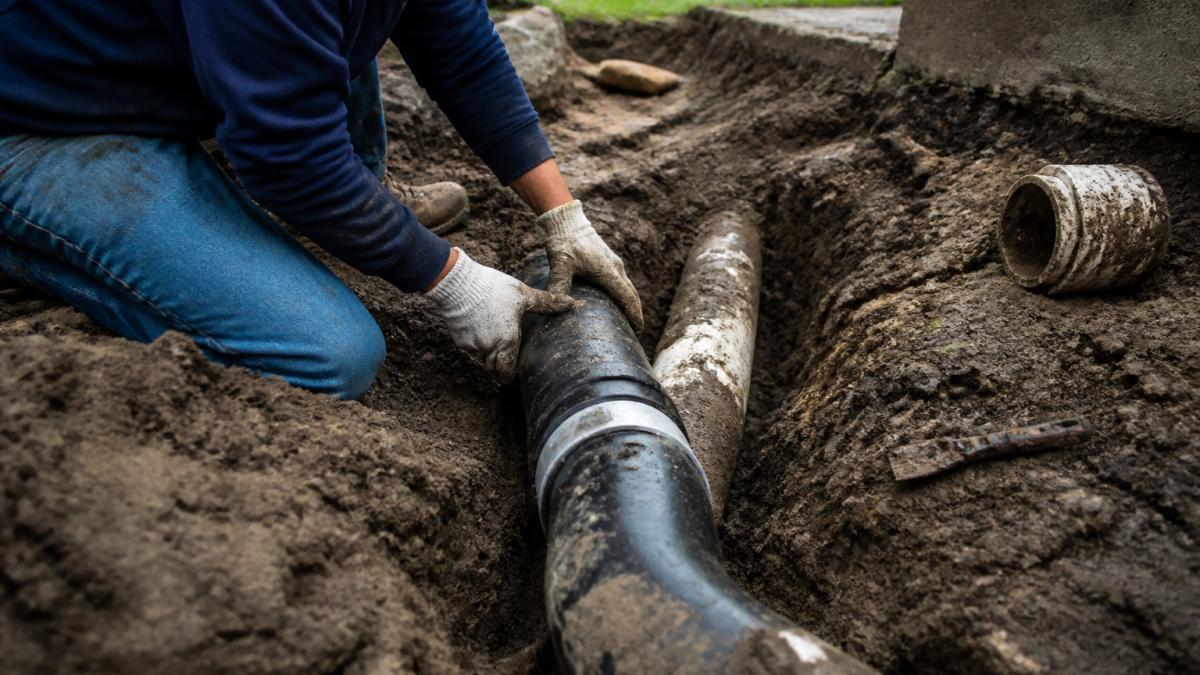
- Cured-in-place pipe (CIPP) lining, a resin-saturated felt tube is inverted into the existing pipe and cured in place, creating a new pipe inside the old one. It's the most common residential method and works on pipes that are cracked, root-intruded, or joint-separated but still round.
- Pipe bursting, a bursting head is pulled through the old pipe, fracturing it outward while pulling a new HDPE pipe behind it. It's the only trenchless method that increases pipe diameter, and it requires two access pits rather than one.
- Slip lining, a smaller-diameter pipe is pulled through the existing one. It's the cheapest trenchless option but reduces flow capacity, so it's rarely appropriate for a main service line.
When Trenchless Is Disqualified
The honest limitation: trenchless doesn't work on collapsed or severely misaligned pipe. If the line has lost its shape, you're excavating. Three other conditions rule it out:
- Bellied or back-pitched sections, where the pipe has settled and holds standing water. Lining a belly just encases the problem.
- Offset joints greater than roughly 10-15% of pipe diameter, the liner cannot bridge the gap cleanly.
- Multiple severe defects along the run, spot repairs and liners eventually cost more than a single replacement.
The Real Comparison Is Total Cost of Ownership
The sticker price is the wrong number to compare. The right number is upfront cost plus restoration plus expected life of the repair.
- A traditional dig on a finished yard adds sod, paver, or driveway replacement on top of the plumbing invoice. On a driveway crossing, that restoration alone can exceed the plumbing work.
- A trenchless liner avoids most restoration but has a shorter expected service life than a new pipe in some conditions, and it cannot be lined again later.
- A full dig-and-replace resets the clock on the entire run, which is why it wins on long-term cost when the existing pipe is already at end of life.
Signs of a Broken Sewer Line You Should Not Ignore
The clearest signs of a broken sewer line are recurring backups in multiple drains, sewage odor indoors, unusually green patches in the lawn, and slow drainage across the whole house rather than one fixture. A single slow sink is a clog. Three slow drains at once is a main line problem.
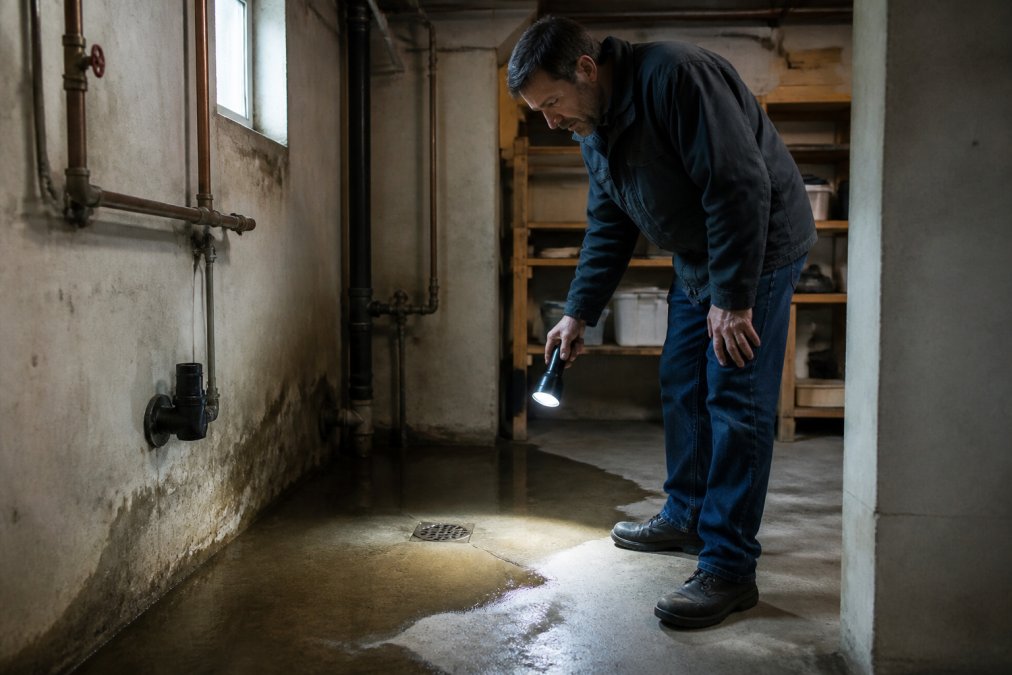
Other signals worth acting on:
- Foundation cracks appearing alongside dampness
- Gurgling from toilets after running the washing machine
- Sinkholes or soft, sunken spots in the yard
- Rodent or insect activity near the cleanout
How to Prevent Sewer Backups in Older Homes
Preventing sewer backups in older homes comes down to three habits: annual hydro-jetting, root management, and knowing where your cleanout is. Homes built before 1975 with clay or cast iron service lines are highest-risk, because joint separation and root intrusion are cumulative.
- Schedule annual drain cleaning if your home predates 1980
- Keep trees and large shrubs at least 3 metres from the service line
- Never pour cooking grease down any drain
- Install a backwater valve if your basement fixtures sit below the municipal main
Insurance, Home Warranties, and DIY Assessment
Home insurance rarely covers sewer line repair, and this is where most homeowners get an unpleasant surprise. Standard policies typically exclude gradual deterioration, root intrusion, and wear and tear, the majority of residential sewer failures. What insurance may cover is sudden, accidental damage, such as a line crushed by a contractor or a backup causing interior water damage.
What to Look For in Your Policy Wording
The exclusion is almost always phrased around "gradual" or "wear and tear," and the coverage trigger is "sudden and accidental." That distinction decides most claims. Three things to check:
- Sewer backup endorsement, many standard policies exclude sewer backup entirely unless you add it. This covers water damage inside the home from a backup, not the pipe repair itself.
- Service line coverage, a separate endorsement covering the buried line between your home and the municipal main. It is not standard, and it is the only endorsement that pays for the repair.
- Exclusion for roots and deterioration, even with service line coverage, root intrusion is often carved out as a maintenance issue rather than a sudden event.
How Home Warranties Actually Pay Out
Home warranties are a different product and worth reading closely. Many cap sewer line coverage at a few thousand dollars and require an inspection history you probably don't have. The mechanics matter more than the marketing:
- Per-incident caps, the warranty pays up to a limit per claim, not per year. A $5,000 cap on a $20,000 replacement leaves you covering the difference.
- Access and restoration exclusions, many warranties cover the pipe but not the excavation, landscaping, or driveway restoration. That is often the larger number.
- Pre-existing condition clauses, if the line was already failing when you bought the warranty, the claim is denied. This is why providers push for a camera inspection at enrollment.
- Approved contractor networks, you usually cannot choose your own plumber. The warranty dispatches its own, and their scope may be narrower than an independent contractor would recommend.
DIY vs. Professional: A Decision Framework
On DIY assessment: you can check for slow drains, listen for gurgling, and locate your cleanout. You cannot diagnose a cracked pipe or measure root intrusion without a camera. The Canada Mortgage and Housing Corporation's guidance on home maintenance is a reasonable starting point for understanding your home's drainage system, but it won't replace a scope.
Safe to attempt yourself:
- A single slow or clogged fixture, snake the trap or the branch line.
- Locating your cleanout and confirming it is accessible.
- Pouring a drain-safe enzyme treatment for routine grease and scale.
- Checking for gurgling by running the washing machine and listening at the nearest floor drain.
Stop and call a professional:
- Two or more fixtures draining slowly at the same time; that is a main line symptom, not a branch clog.
- Any sewage odor indoors, especially in the basement.
- A backup that returns after you snake it.
- Standing water in the cleanout after the house has been idle.
- Any sign of a sunken or soft spot in the yard along the service line.
Frequently Asked Questions
What factors influence the total cost of sewer line repair?
The main cost drivers are pipe material, total length of the damaged section, depth of the line, and soil conditions. A shallow PVC spot repair costs far less than a deep clay line under a concrete driveway. Access matters too: trenchless methods avoid excavation but cost more upfront, while traditional digging adds restoration costs for lawns, patios, and landscaping.
Does home insurance cover the cost of sewer line repair?
Most standard home insurance policies in Canada exclude sewer line repair when the damage results from age, wear, or root intrusion. Coverage usually applies only when a sudden event, like ground movement or a covered peril, causes the damage. Review your policy or ask your insurer directly, and check whether a sewer line endorsement or home warranty plan is available for your property.
Is trenchless sewer repair more expensive than traditional excavation?
Trenchless methods often cost more per project upfront. Trenchless repair for a 30-meter section ranges from $8,000 to $25,000 or more, depending on method and site access. Traditional dig-and-replace can be cheaper on simple, shallow lines, but adds restoration costs for driveways, decks, and landscaping. The right choice depends on your line's depth, material, and location.
Can I repair a sewer line myself?
Minor clogs and slow drains can sometimes be cleared with a drain snake or hydro-jetting rental, but a damaged or collapsed pipe requires professional excavation or lining. A sewer camera inspection confirms what is actually wrong before you spend money. Attempting structural repairs without that diagnosis often makes the problem worse and adds to the final cost of sewer line repair.
Sewer line problems get more expensive the longer you wait, and the gap between a scheduled repair and an emergency excavation is where budgets break. DrainageBusters handles sewer repair, drain tile installation, and wet basement remediation across Metro Vancouver and the Fraser Valley, with free estimates and a camera inspection before we recommend anything. Call (778) 320-4013 and get a straight answer on what your line actually needs.