 how-to
How to Stop Yard Water Pooling: 7 Proven Solutions
Table of Contents
- Diagnose the Source of Standing Water
- Improve Surface Drainage and Runoff Flow
- Yard Grading for Drainage: Create Proper Slope
- Aerate Compacted Soil to Improve Infiltration
- French Drain Installation for Persistent Pooling
- Downspout Drainage Solutions and Water Diversion
- Safety, Legal, and Long-Term Maintenance Considerations
- When to Call a Drainage Professional
- Frequently Asked Questions
Last Updated: October 13, 2026
Diagnose the Source of Standing Water
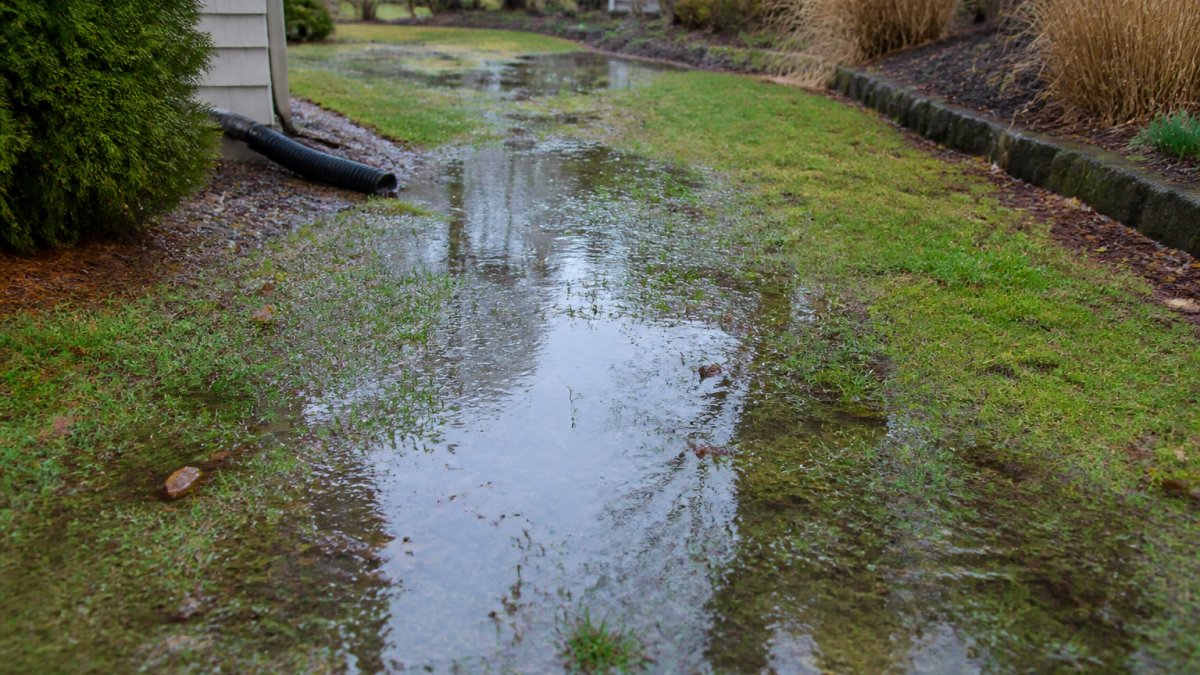
Standing water in your yard creates a breeding ground for mosquitoes, damages grass, and signals a drainage problem that won't fix itself, which is why you need to stop yard water pooling.
The source of yard water pooling typically falls into three categories: soil compaction that prevents water from soaking in, low spots where water naturally collects, or poor surface drainage that directs runoff toward your property instead of away from it.
Check soil type and compaction
Soil type determines how fast water infiltrates. Clay soil drains slowly. Sandy soil drains quickly.
To check your soil, dig a small hole about 30 centimeters deep in the pooling area. Fill it with water.
Compacted soil is common in high-traffic areas. Kids playing, foot traffic, or heavy equipment can compress soil so tightly that water cannot penetrate.
Observe water patterns during and after rain
Watch your yard during the next rainfall. Does water pool immediately or only after heavy rain? Does it drain within hours or stay for days?
Patterns matter:
- Water pools only after heavy downpours → low spots or poor surface drainage
- Water pools after every rain, even light showers → compacted soil or clay
- Water appears near downspouts → gutters and downspouts are directing water toward pooling areas
Mark the pooling areas with stakes or flags. Note the timing. This information helps you choose the right solution.
Identify low spots and slope direction
Stand in your yard and look at the ground surface. Does it slope away from your house and structures?
A proper slope should fall at least 1 inch per 10 feet of horizontal distance away from your foundation.
Low spots are depressions in the ground where water collects like a bowl.
Improve Surface Drainage and Runoff Flow
Surface drainage is your first line of defense. Water that flows away from your property doesn't pool, seep into foundations, or damage your yard.
Clear gutters and downspouts
Clogged gutters overflow. Water spills over the edge and lands directly against your foundation or in nearby low spots.
Clean gutters twice yearly, in spring and fall. Remove leaves, twigs, and debris.
Downspouts should extend at least 1.2 to 1.8 meters away from your foundation. Short downspouts dump water too close to the house.
Grade low spots and fill depressions
Small depressions can be filled with topsoil and reseeded. For a depression 5 to 7.5 centimeters deep, add topsoil, tamp it gently, and seed with grass.
Larger low spots need more soil. A depression 15 to 30 centimeters deep requires several inches of fill.
Fill material should be compacted but not over-compacted. Overly compacted fill becomes the same water-blocking problem you're trying to solve.
| Solution | Best For | Difficulty | Time |
|---|---|---|---|
| Fill small depression | Areas under 7.5 centimeters deep | Easy | 1-2 hours |
| Fill large depression | Areas 15 to 30 centimeters deep | Moderate | 4-8 hours |
| Regrade entire section | Slope toward house | Hard | 1-3 days |
Yard Grading for Drainage: Create Proper Slope
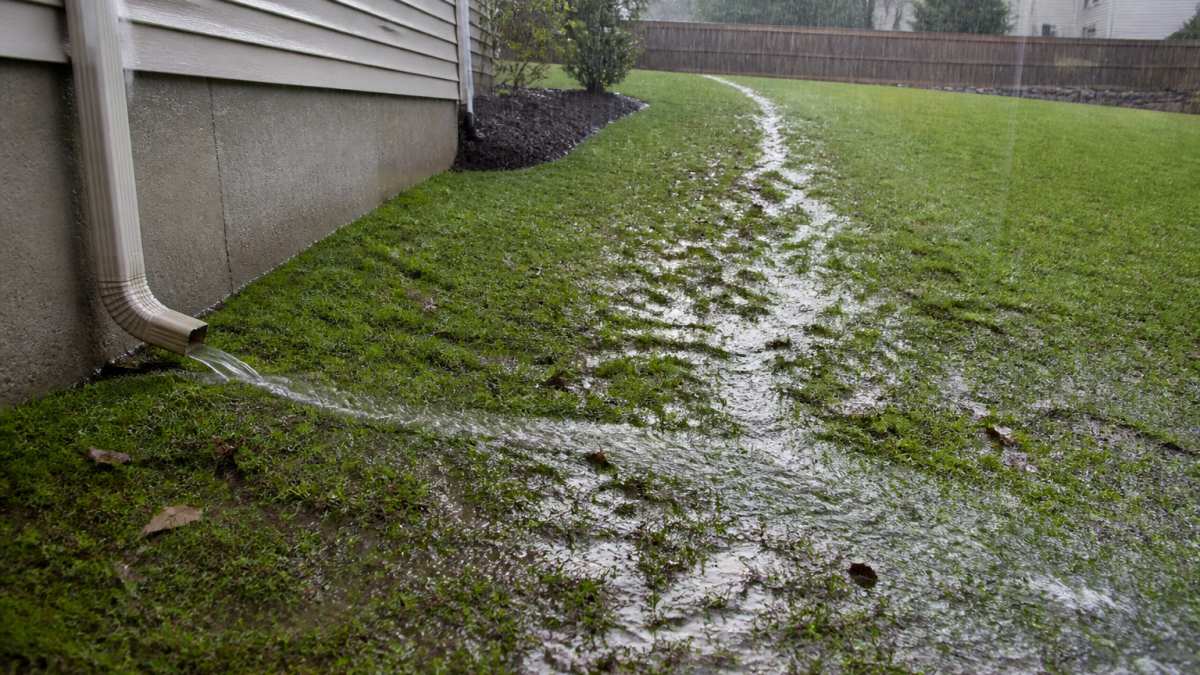
Regrading your yard is the most effective long-term fix for persistent pooling. A proper slope directs water away from structures and toward natural drainage or a designated outlet.
Calculate slope percentage and fall
Slope is measured as inches of fall per 10 feet of horizontal distance. The standard is 1 inch of fall per 10 feet.
To calculate slope percentage: divide the vertical drop by the horizontal distance, then multiply by 100.
For a yard 12 meters from your foundation to the property line, you need 10 centimeters of total fall.
Regrade away from structures
Regrading means removing soil from high areas and adding it to low areas, then smoothing the result to create an even slope away from your house.
Steps to regrade:
- Mark the desired slope with stakes and string
- Remove topsoil from high areas and stockpile it
- Move subsoil to fill low spots
- Compact fill material in layers
- Return topsoil to the surface
- Seed or sod the regraded area
Regrading is labor-intensive and often requires equipment. For large areas or significant slope changes, hiring a professional is worth the cost. At DrainageBusters, we assess your yard's drainage and design a solution that directs water safely away from your foundation and toward a proper outlet.
Aerate Compacted Soil to Improve Infiltration
Aeration creates pathways for water to penetrate compacted soil. Core aeration removes small plugs of soil, breaking up the hard layer that prevents infiltration.
Core aeration is most effective in spring or fall when soil is moist but not waterlogged.
After aeration, water soaks in faster. A single aeration session can improve infiltration significantly.
Aeration works best when combined with other fixes.
French Drain Installation for Persistent Pooling
A French drain is a gravel-filled trench with perforated pipe that collects and diverts water underground. It's an effective solution to stop yard water pooling when surface fixes aren't enough.
When to install a French drain
Install a French drain if:
- Standing water persists after filling low spots and improving grading
- Soil is clay-heavy and won't infiltrate even after aeration
- Water pools in the same spot every time it rains
A French drain works by collecting water that pools on the surface and moving it underground to a drainage outlet. Perforated pipe inside the trench allows water to enter, and the gravel surrounding the pipe filters the water as it flows.
Basic installation steps
A French drain requires digging a trench at least 45 centimeters deep and 30 centimeters wide. The trench should slope gently toward the drainage outlet, at least 1 inch of fall per 10 feet of trench length.
Steps:
- Dig the trench from the pooling area to the drainage outlet
- Line the bottom with landscape fabric to prevent soil from clogging the gravel
- Add 10 centimeters of gravel
- Lay perforated drain tile or PVC pipe on the gravel
- Cover the pipe with 10 centimeters of gravel
- Fold landscape fabric over the gravel
- Add soil and topsoil on top
- Seed or sod the trench area
The outlet is critical. Water must drain to a safe location, a storm drain, a natural drainage swale, or a designated area away from structures and property lines.
Downspout Drainage Solutions and Water Diversion
Downspouts are often overlooked, yet they're one of the easiest sources of pooling water to fix. A short downspout can dump hundreds of gallons of water per storm directly onto your yard.
Extend downspouts away from pooling areas
Downspout extensions are simple and inexpensive. They're flexible or rigid pipes that attach to the downspout outlet and carry water 1.2 to 1.8 meters away from the house.
For pooling areas near downspouts, extend the downspout directly away from the problem.
Solid extensions are better than splash blocks. A splash block sits on the ground and directs water a few feet away, but water still pools nearby.
Install a dry well for yard drainage
A dry well is a buried pit filled with gravel that collects and disperses water slowly into the surrounding soil.
Dig a hole 0.9 to 1.2 meters deep and 0.6 to 0.9 meters wide. Line it with landscape fabric. Fill it with gravel.
Water enters the dry well and percolates into the soil around it. This prevents water from pooling on the surface.
Safety, Legal, and Long-Term Maintenance Considerations
Before you install any drainage solution, confirm that redirected water won't create problems for neighbors or violate local regulations.
Protect foundations, septic systems, and utility lines
Digging for drains or regrading requires knowing where underground utilities are located. Call your local utility locating service before you dig.
Avoid directing water toward septic systems. Water should drain away from the septic tank and drain field.
Foundation drains should not be blocked or damaged during regrading. If your home has an existing perimeter drain system, work carefully around it.
Confirm drainage outlet location is safe and legal
Water must drain to a legal outlet. In most areas, you can discharge to:
- A municipal storm drain system
- A natural drainage swale or creek (where permitted)
- Your own property, away from neighbors
You cannot discharge water onto a neighbor's property or into their foundation area. Check local regulations before installing a drain or regrading. Some municipalities require permits for French drains or major grading changes.
Monitor and maintain your drainage solution
After installing a fix, monitor how it performs during the next few rainfalls. Does water still pool? Does the drain or regraded area function as intended?
Maintain your solution:
- Clear downspout extensions of debris
- Inspect French drains after heavy rains
- Reseed regraded areas if grass thins
- Aerate again if compaction returns
Drainage problems can recur if maintenance is neglected. A French drain can clog if debris isn't filtered. Regraded soil can settle and create new low spots.
When to Call a Drainage Professional
Some pooling water problems are straightforward. Others require professional assessment and equipment.
Call a professional if:
- Water pools persistently despite filling low spots
- You need to install a French drain longer than 15 meters
- Regrading requires moving large volumes of soil
- Water is near your foundation and you suspect a deeper drainage issue
At DrainageBusters, we assess your yard's drainage and design a solution that works. We handle drain tile installation and French drain systems.
Standing water doesn't have to be permanent. Diagnosis, surface fixes, and professional solutions can restore your yard.
Frequently Asked Questions
How do you find the cause of standing water in a yard?
Observe where pooling water collects during and after heavy rain. Check soil type; clay soil drains poorly and holds water longer than sandy soil. Look for low spots and depressions where water naturally settles. Walk the perimeter of your property to see which direction water flows, and check whether downspouts, gutters, or roof runoff are directing water toward problem areas. Compacted soil also prevents infiltration; press a screwdriver into wet soil to see how easily it penetrates. These observations help identify whether the issue is poor slope, soil compaction, clogged gutters, or water being directed incorrectly.
Will regrading a yard stop water from pooling?
Regrading works if the root cause is improper slope or low spots collecting runoff. Creating a gentle slope away from structures (typically 1 inch of fall per 10 feet) allows water to flow naturally rather than pool. However, regrading alone may not solve pooling if the problem is compacted soil that prevents infiltration, or if water is being directed from downspouts or neighboring properties. For persistent standing water, combine regrading with aeration or drain installation. Professional assessment helps determine whether regrading alone is sufficient or if additional drainage solutions are needed.
When should you install a French drain for yard drainage?
Install a French drain when standing water persists despite regrading, aeration, and improved surface drainage. French drains are most effective for areas with heavy clay soil, chronic pooling in the same spots, or water that collects near foundations or patios. They work by collecting water in a perforated pipe buried in a gravel-filled trench and directing it to a safe outlet. If your yard remains waterlogged after heavy rain or your lawn develops wet spots even in dry periods, a French drain may be necessary. Professional drainage consultants can assess whether a French drain, dry well, or combination of solutions is right for your specific situation.
What should I do if water pools near my foundation or septic system?
Water pooling near your foundation can cause structural damage and basement moisture. Immediately redirect runoff away from the foundation using downspout extensions or regrading. Never direct water toward a septic system, as excess moisture can overload the drainfield and cause system failure. Before installing any drainage solution, locate buried utilities and septic systems to avoid damage. If pooling persists near critical structures, contact a professional drainage consultant. They can install drain tile systems, French drains, or other solutions that safely divert water away from vulnerable areas while ensuring the outlet drains to a safe, legal location.
Yard water pooling damages your lawn, attracts pests, and signals a drainage problem that worsens over time. DrainageBusters specializes in drainage solutions that work. We install French drains, regrade yards, and design systems that keep water moving away from your property. Call (778) 320-4013 for a free estimate and discover how we can restore your yard's drainage.