 how-to
Preventing Sewer Backups in Older Homes: 2026 Guide
Table of Contents
- Why Older Homes Face Higher Sewer Backup Risk
- Sewer Backup Warning Signs You Should Never Ignore
- Older Home Sewer Line Inspection: What to Check and When
- Backwater Valve Installation: Your Best Defense Against Municipal Surcharge
- What to Do During a Sewer Backup: Step-by-Step Response
- A Practical Maintenance Schedule for Preventing Sewer Backups
- Prevention Options Compared: Cost, Effectiveness, and Limitations
- Local Rules, Permits, and Who Is Responsible for the Sewer Lateral
- Frequently Asked Questions
Last Updated: October 4, 2026
Why Older Homes Face Higher Sewer Backup Risk
Preventing sewer backups in older homes starts with one blunt fact: the pipe running under your lawn was built for a different era.
A basement floor drain burbles. A laundry sink drains slow. Then a heavy rain arrives and everything comes back up at once.
Older homes carry three built-in disadvantages:
- Pipes made from materials that crack, sag, or snag waste over time
- Shallow slopes that let solids settle instead of flowing
- Connections to the city main that were never designed for today's volumes
The result is predictable. A clogged drain becomes a sewer backup, and a sewer backup becomes a flooded basement.
Legacy Pipe Materials and Their Failure Points
Clay tile was the standard for decades. It's brittle. Ground movement opens the joints, and tree roots slip into those gaps.
Cast iron corrodes from the inside out. A cast iron sewer line can look fine from above and be paper-thin underneath.
Orangeburg pipe is the worst case. It's tar paper pressed into a tube. It deforms, flattens, and loses its shape.
How Aging Laterals Connect to the Municipal System
The sewer lateral is the pipe that runs from your home to the municipal main. On an older property, that lateral may be 50, 70, or 100 years old.
Here's what catches homeowners off guard: the city owns the main, but you usually own the lateral.
Older laterals also connect to mains that now carry far more flow than they did when they were built. During heavy rainfall, the main can surcharge.
Sewer Backup Warning Signs You Should Never Ignore
Sewer backup warning signs show up weeks before the actual flood, and most homeowners miss them.
Watch for these signals:
- Multiple drains draining slowly at the same time
- A gurgling sound from the toilet when you run the washing machine
- Sewage smell in the basement or near floor drains
One slow drain is usually a local clog. Several slow drains at once point to the main line.
Sewer backup is the reversal of wastewater flow into your home, caused by a blockage in the lateral or a surcharge in the municipal main.
That difference matters. If you treat a main-line problem like a kitchen sink clog, you waste time and the water keeps rising.
Older Home Sewer Line Inspection: What to Check and When
Older home sewer line inspection should happen before you have a problem, not after.
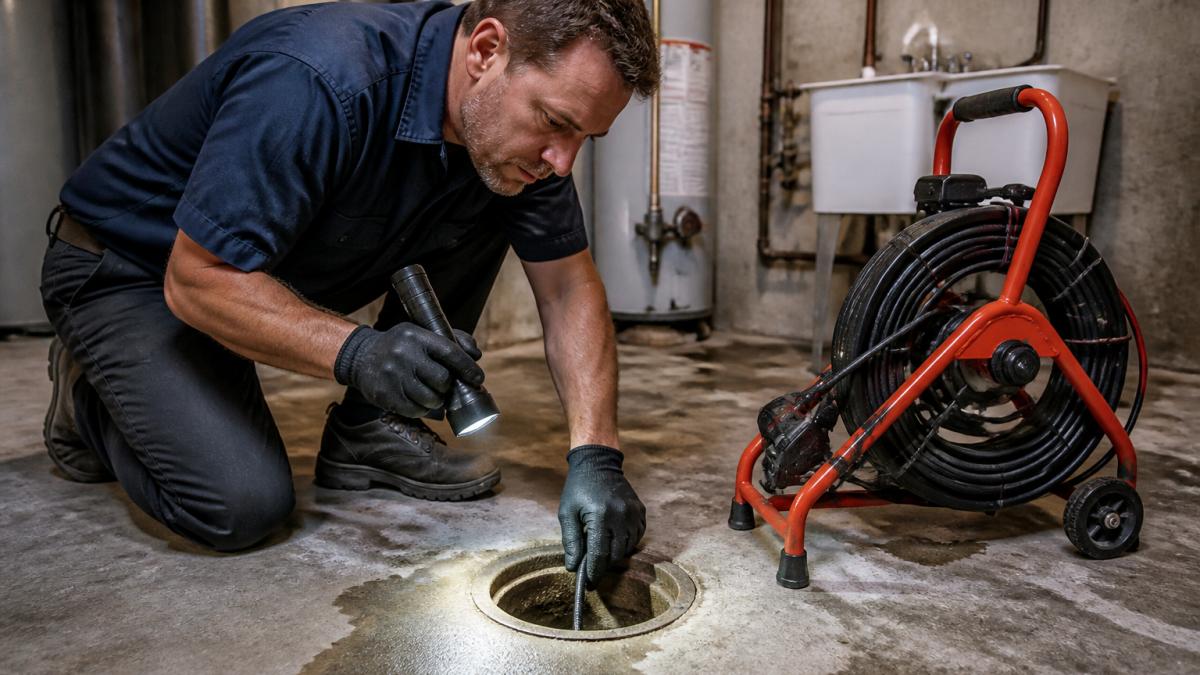
Start with what you can see yourself:
- Check floor drains for standing water or odor
- Look at exposed pipes in the basement for rust stains or cracks
- Note any soft, sunken patches in the lawn above the sewer line
Those lawn patches matter more than people think. A sunken strip above the lateral often means the pipe has separated or collapsed.
DIY Visual Checks vs Camera Inspection
A visual check tells you something is wrong. A camera inspection tells you exactly what and where.
A camera inspection sends a waterproof camera down the lateral and records the inside of the pipe. You see roots, cracks, offsets, and blockages in real time.
DIY checks are free and worth doing. But they can't see inside a clay tile joint or a corroded cast iron wall.
Backwater Valve Installation: Your Best Defense Against Municipal Surcharge
Backwater valve installation is the single most effective step for preventing sewer backups caused by city main surcharge.
How it works:
- Wastewater flows out normally, pushing the flap open
- When the main surcharges, flow reverses
- The flap slams shut and seals the line
- Your basement stays dry
A backwater valve only helps if it's maintained. Debris and grease can jam the flap open, and a stuck valve is no valve at all.
The best setup for older homes combines:
- A mainline backwater valve on the sewer lateral
- A check valve on any basement fixture below the main line
- A sump pump for groundwater that seeps in independently of the sewer
That last point trips people up. Sewer water and groundwater are separate problems. A backwater valve stops sewage.
What to Do During a Sewer Backup: Step-by-Step Response
What to do during a sewer backup comes down to speed and safety. Sewage is a health hazard, and the first hour matters.
- Stop using water immediately. Every flush and every load of laundry adds to the flood.
- Cut power to the affected area if it's safe to reach the panel. Never stand in sewage to flip a breaker.
- Leave the basement. Sewage carries bacteria and pathogens. Get kids and pets out.
- Call a professional for both the blockage and the cleanup. Sewage cleanup is not a mop-and-bucket job.
- Document everything with photos before anything is moved, for your insurance claim.
- Don't run appliances until the line is cleared and inspected.
A common mistake is assuming the water will drain on its own. It won't. If the main is surcharging, the water has nowhere to go until the rain stops or the blockage clears.
A Practical Maintenance Schedule for Preventing Sewer Backups
Preventive maintenance for older homes works best as a calendar, not a crisis response. Here's a practical maintenance schedule:
| Frequency | Task | Why It Matters |
|---|---|---|
| Weekly | Pour hot water down kitchen drains | Keeps grease from hardening in the line |
| Monthly | Run hot water flush on all floor drains | Refills traps, clears soap buildup |
| Monthly | Check backwater valve flap moves freely | A stuck valve fails silently |
| Every 3 months | Enzyme-based cleaner in main line | Breaks down organic buildup |
| Every 6 months | Clear gutters and downspouts | Keeps stormwater out of the sanitary sewer |
| Every 2-3 years | Camera inspection on homes over 40 years | Catches root intrusion and cracks early |
Two habits matter as much as the schedule. Never pour grease, fats, and oils down any drain. And never flush wipes, paper towels, or anything labeled non-flushable, even if the package says otherwise.
Hair is the quiet killer in bathroom drains. A hair catcher costs almost nothing and stops the single most common bathroom blockage before it starts.
Prevention Options Compared: Cost, Effectiveness, and Limitations
Prevention options for sewer backups differ widely in cost, effectiveness, and what they actually protect against. Matching the fix to the problem is the whole game.
| Option | Best Against | Limitations |
|---|---|---|
| Backwater valve | Municipal surcharge | Needs quarterly maintenance |
| Check valve on fixtures | Basement fixture backflow | Doesn't protect the whole home |
| Sump pump | Groundwater seepage | Power-dependent, needs backup |
| Root treatment | Tree root intrusion | Temporary, roots return |
| Pipe lining | Cracks and joint gaps | Not suitable for collapsed pipe |
| Pipe replacement | Failed or collapsed lines | Highest cost, longest disruption |
A backwater valve is often a good value for many older homes because it targets a common cause of basement sewage flooding.
What most guides miss is that these options aren't competing. A complete prevention plan usually stacks two or three of them.
Local Rules, Permits, and Who Is Responsible for the Sewer Lateral
Responsibility for the sewer lateral typically falls on the homeowner, but the rules vary by municipality, and permits are usually required for any work on the line. Always confirm with your local authority before booking work.
The general split:
- You own and maintain the lateral from your home to the property line or the connection point
- The municipality owns the main line and the portion beyond the property line
- Permits are commonly required for valve installation, lining, and replacement
Rules differ between municipalities, and some programs share costs for lateral repairs. Check your local bylaws and any current rebate or cost-share programs before you commit to a scope of work.
Diagnosing the Source: Lateral Blockage vs. Municipal Surcharge
This is the distinction that determines who you call and who pays. Before you book anyone, work through these signs:
Signs it's your lateral (private blockage):
- Backups happen without rain, often after heavy household use (laundry, showers, multiple flushes)
- Only your home is affected, neighbors are fine
- Slow drains throughout the house, not just one fixture
Signs it's the municipal main (surcharge or overload):
- Backups coincide with heavy rainfall or snowmelt
- Multiple homes on the street back up at the same time
- Water recedes on its own once the rain stops
Signs it's an isolated fixture clog:
- One drain only; everything else flows normally
- No sewage odor elsewhere in the home
- No correlation with rain or whole-house use
If it's a municipal surcharge, a backwater valve is the fix, clearing the lateral won't help because the problem is downstream of your property. If it's your lateral, clearing or repair is the fix. If it's one fixture, start with that fixture.
Permits, Rebates, and Paperwork
- Confirm jurisdiction first. Call your municipality's public works or building department and ask two questions: who owns the lateral at the connection point, and what permits are required for a backwater valve, lining, or replacement.
- Ask about cost-share and rebate programs. Many municipalities offer partial funding for lateral repair or backwater valve installation, often tied to flood-mitigation programs. These change year to year, so verify current terms.
- Get the permit before work starts. Unpermitted work can complicate a future home sale, void insurance coverage for a related claim, and force you to redo the job.
Who to Call, and When
- Municipal public works, if you suspect a main-line surcharge, a street-level blockage, or a collapsed main. They can confirm whether the problem is on their side.
- A licensed drainage contractor, for lateral clearing, camera inspection, backwater valve installation, lining, or replacement.
- Your insurer, as soon as sewage enters the home, before cleanup begins, to confirm coverage and documentation requirements.
Frequently Asked Questions
What causes sewer backups in older homes?
Older homes typically have clay tile, cast iron, or Orangeburg sewer laterals that crack, corrode, or collapse over time. Tree roots enter through joint gaps, grease and wipes accumulate on rough interior walls, and many older laterals lack a backwater valve. When the municipal sewer surcharges during heavy rain, wastewater has nowhere to go but into the basement. A camera inspection identifies which of these is driving your backups.
Should I install a backwater valve to prevent sewer backups?
A backwater valve is the single most effective device for stopping municipal sewage from entering your basement. It closes automatically when flow reverses, blocking surcharge from the city main. Installation requires a permit in most municipalities and must be done on the correct branch of the lateral. A licensed drainage contractor can confirm whether your home qualifies and whether a rebate is available.
How often should an older home's sewer line be inspected?
Homes over 40 years old should have a camera inspection every 18 to 24 months, or annually if you have had a previous backup or know tree roots are nearby. Between professional inspections, watch for slow drains, gurgling toilets, and sewage odors. If any of those appear, book an inspection immediately rather than waiting for the scheduled date.
What should I do if sewage starts backing up into my home?
Stop using all water immediately, including washing machines and dishwashers. Do not flush toilets or run taps. Keep people and pets away from the affected area, and avoid contact with the water, which carries bacteria and viruses. Call a licensed drainage contractor to clear the blockage and document the damage for your insurer. Cleanup should include protective gear, disinfection, and disposal of porous materials that absorbed sewage.