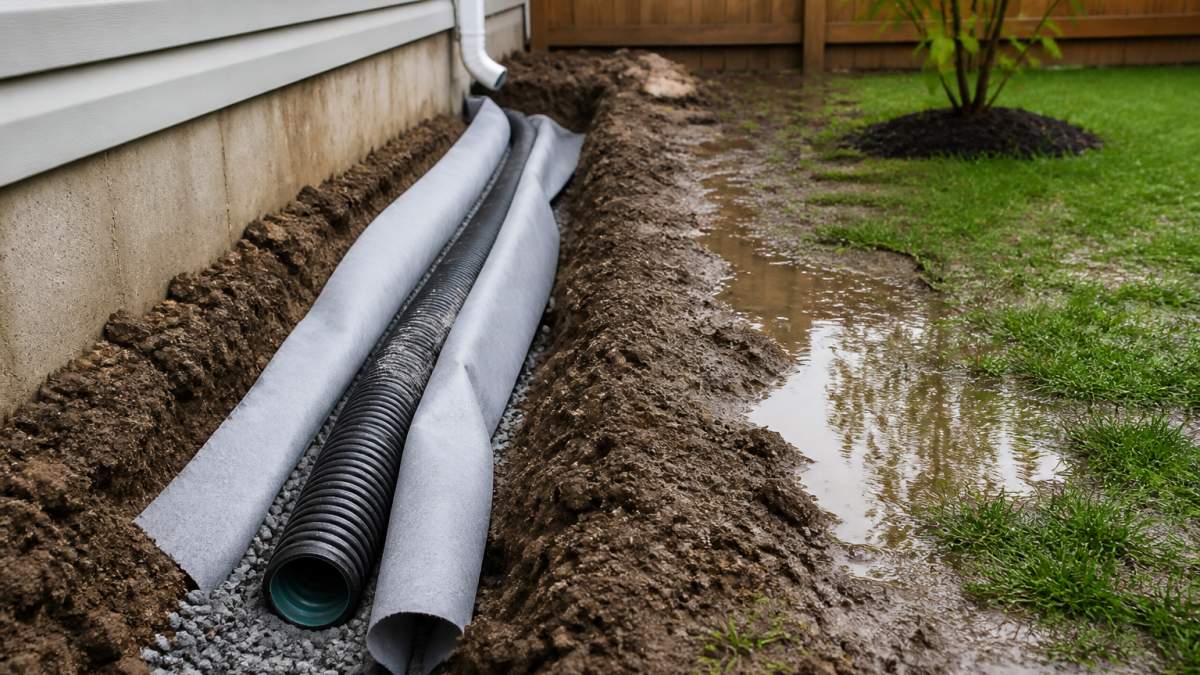
 how-to
Drainage Solutions for Soggy Yards: A How-To Guide
Table of Contents
- Assess Your Drainage Problem and Soil Conditions
- How to Regrade Your Yard for Better Drainage
- Install a French Drain System
- Implement Surface Drainage Solutions
- Enhance Soil and Vegetation for Water Absorption
- Understand Permits and Professional Installation
- Frequently Asked Questions
Last Updated: October 2, 2026
Assess Your Drainage Problem and Soil Conditions
Standing water in your yard signals a drainage problem that won't fix itself, making drainage solutions for soggy yards essential. The longer you wait, the worse it gets. Your foundation, landscaping, and soil all suffer when water sits instead of flowing away.
The first step is understanding what you're dealing with. Different soggy yards have different causes. Some have poor surface grading. Others have clay soil that won't absorb water. Many have both problems at once.
Identify standing water and soil saturation
Walk your yard after heavy rain. Where does water pool? Does it drain within hours or sit for days? Note the spots. These are your problem areas.
Check for these signs of soil saturation:
- Water pooling in low spots for more than a few hours
- Soft, spongy ground that feels wet underfoot
- Dead grass patches in the same locations
- Visible water seeping from slopes or hillsides
- Moss or algae growing in consistently wet areas
Soil saturation happens when water can't percolate down into the ground fast enough. Clay soil is the main culprit in many yards. Clay particles pack tightly together, blocking water movement.
Test soil percolation and clay content
A simple percolation test tells you how fast your soil drains. Dig a hole about 30 centimeters deep in your problem area. Fill it with water. Time how long it takes to drain completely.
If the water drains in under an hour, your soil percolates well. If it takes several hours or doesn't drain at all, you have a percolation problem. This is critical information for choosing your solution.
Clay content matters too. Squeeze a handful of wet soil from your problem area. If it forms a tight ball that doesn't crumble, you have significant clay. Heavy clay soil needs different treatment than sandy or loamy soil.
You can also send a soil sample to a local agricultural testing lab. They'll measure clay content, pH, and other factors. This costs less than guessing and choosing the wrong solution.
How to Regrade Your Yard for Better Drainage
Regrading fixes surface drainage problems. Water should flow away from your house and toward natural drainage points or street gutters. If your yard slopes toward your foundation, water will find its way to your basement.
Establish proper landscape slope
The goal is simple: create a slope that moves water away from structures. Ideally, the ground should drop about 5 centimeters for every 1.5 meters of distance from your house. This gentle slope moves water without looking unnatural.
Start from your foundation. Walk outward and feel the slope. Does the ground drop away or slope back toward your house? If it slopes back, water will pool near your foundation.
To fix this, you need to add soil and reshape the grade. Remove any mulch, rocks, or plants from the area closest to your foundation. Add topsoil and compact it firmly. Rake it to create the proper slope.
This sounds simple, but execution matters. Many homeowners add soil without proper compaction. The soil settles over time, and the slope disappears. Compact in layers as you build up the grade.
Create swales and grading channels
A swale is a shallow, vegetated channel that directs water. It looks like a gentle ditch with sloped sides. Water flows through it toward a drainage point. Swales are less obvious than French drains and work well for surface runoff.
To create a swale:
- Dig a shallow channel, 15 to 30 centimeters deep
- Slope the sides at a gentle angle (not steep)
- Slope the bottom slightly toward your drainage goal
- Plant native grasses or shrubs in the swale
- The vegetation slows water and lets it soak in
Swales work best when they follow the natural contours of your yard. Don't force them uphill. Let gravity do the work.
For larger yards, multiple swales can work together. One swale might direct water from your roof downspout toward another swale that leads to the street or a rain garden.
Install a French Drain System
A French drain is the most reliable long-term solution among drainage solutions for soggy yards, particularly in areas with clay soil and persistent groundwater issues. Industry resources now identify French drains as the primary solution for groundwater and surface water management because they handle both subsurface water and surface runoff.
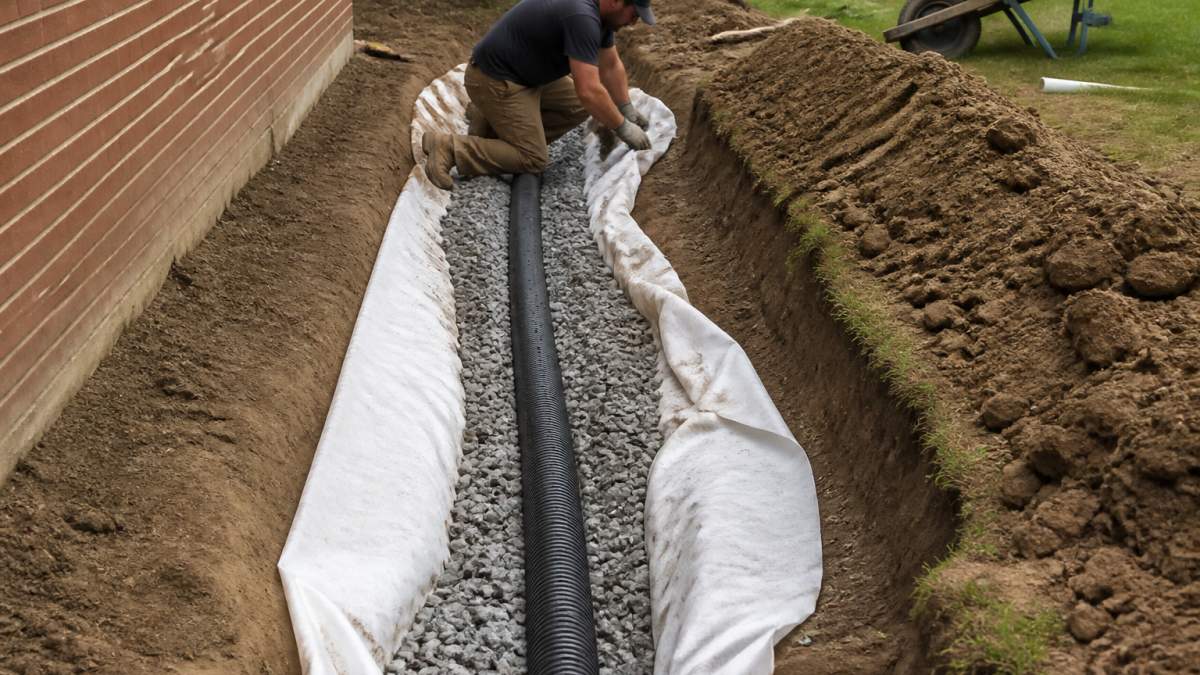
A French drain consists of a perforated pipe buried in a gravel trench. Water enters the pipe through the perforations and flows to a drainage outlet. The system works even when soil won't absorb water naturally.
Choosing best drain tile materials for clay soil
The pipe material matters. Perforated PVC pipe is the most common choice. It's durable, affordable, and easy to install. It resists rot and lasts decades.
Corrugated plastic drain tile is another option. It's flexible, which helps in tight spaces. It costs slightly less than rigid PVC.
For clay soil specifically, the pipe material matters less than the surrounding gravel. The gravel creates a path for water to reach the pipe. In clay soil, water moves through the gravel much faster than through the clay itself.
Choose a pipe with a diameter suitable for most residential applications. Larger pipe handles more water volume but costs more and takes up more space. Smaller pipe clogs more easily.
Laying perforated drainage pipe and geotextile fabric
The installation process determines whether your French drain works for years or fails in months.
Start by digging the trench. It should slope slightly toward your drainage outlet (at least 1 centimeter drop per 3 meters of length). Slope is critical. Without it, water sits in the pipe instead of flowing out.
Line the trench with geotextile fabric. This permeable material prevents soil from clogging the gravel. Fold the fabric up the sides of the trench.
Lay 5 to 10 centimeters of gravel at the bottom.
Implement Surface Drainage Solutions
Surface drainage moves water that pools on top of the ground. These solutions work alongside or instead of subsurface systems, depending on your situation.
Extend downspouts and manage surface runoff
Downspouts dump water right next to your foundation. This water soaks into the ground near your house, creating the exact problem you're trying to solve.
Install trench drains and catch basins
Trench drains are shallow channels that capture surface water. They're useful in low-lying areas where water naturally collects.
Enhance Soil and Vegetation for Water Absorption
Better soil absorbs more water. Better vegetation helps too. Together, they reduce surface runoff and improve percolation.
Aeration and soil amendment techniques
Compacted soil won't absorb water. Aeration breaks up compaction and creates space for water to move through.
Rain gardens and permeable paving options
A rain garden is a shallow depression planted with water-loving plants. It captures runoff from roofs or slopes and lets it soak in slowly. The plants slow water movement and improve absorption.
To create a rain garden:
- Dig a shallow basin (15 to 30 centimeters deep) in a low spot
- Line it with geotextile fabric to prevent soil erosion
- Fill with a mix of soil and compost
- Plant native shrubs and perennials that tolerate wet conditions
- Mulch to retain moisture and suppress weeds
Understand Permits and Professional Installation
Some drainage work requires permits. Some requires professional expertise. Knowing the difference saves money and prevents problems.
When to hire a drainage contractor
DIY works for simple projects like extending downspouts or creating swales. Professional installation makes sense for French drains, especially in clay soil where slope and compaction are critical.
Common reasons to hire a professional:
- Installing a French drain system (requires proper slope and compaction)
- Installing a sump pump (requires electrical work and proper drainage)
- Working near your foundation (mistakes can cause basement flooding)
- Dealing with heavy clay soil (needs proper technique)
- Large or complex yards (multiple systems working together)
Local permit requirements and regulations
Drainage work near property lines, easements, or municipal infrastructure often requires permits. Failing to get permits can result in fines or forced removal of your system.
- Setback requirements (how far from property lines)
- Outlet restrictions (where water can drain)
- Soil testing or inspection requirements
- Required contractor licensing or certifications
Frequently Asked Questions
What are the most effective drainage solutions for a soggy yard?
The most reliable long-term solution is a French drain system, which uses perforated drainage pipe and gravel to manage groundwater and subsurface drainage. For surface water, downspout extensions, swales, and grading corrections redirect water away from your home. Rain gardens and permeable pavers absorb excess moisture. The best approach depends on your soil type, water table depth, and whether the problem is groundwater saturation or surface runoff. A soil percolation test helps determine which method works best for your property.
How do I know if I need professional drain tile installation or a DIY solution?
Signs you need professional help include standing water that persists after rain, visible foundation cracks, basement seepage, or clay soil that drains slowly. Professional drainage contractors can perform percolation testing and assess hydrostatic pressure on your foundation. DIY solutions like downspout extensions or shallow grading work for minor surface drainage issues. However, subsurface French drains require excavation, proper slope, and geotextile fabric installation, tasks best left to professionals to ensure compliance with local regulations and long-term effectiveness.
What are the best drain tile materials for clay soil?
For clay soil, perforated PVC or corrugated drainage pipe wrapped in geotextile fabric is most effective, as clay has poor natural percolation. Pair the pipe with a gravel trench filled with clean drainage rock to create a subsurface path for water movement. Avoid solid pipe, which won't allow water infiltration. The geotextile prevents soil particles from clogging the perforations. Clay soil requires more aggressive drainage solutions because water table levels rise quickly; a professional contractor can recommend the pipe diameter and depth needed for your property.
How long does drain tile installation take, and what disruption should I expect?
A typical residential French drain installation takes 3-5 days, depending on yard size and soil conditions. Expect excavation equipment, trenching along foundation perimeter or problem areas, and temporary disruption to landscaping. The contractor will restore the yard afterward. Smaller projects like downspout extensions or grading corrections take 1-2 days. Before work begins, get a clear timeline and ask about site restoration.