 how-to
How Long Does Drain Installation Take
Table of Contents
- Typical Timeline for Drain Installation
- Factors That Affect How Long Drain Installation Takes
- The Drain Tile Installation Process Step-by-Step
- Interior vs. Exterior Drain Systems: Timeline Differences
- Perimeter Drain Installation Cost and Budget Planning
- Wet Basement Remediation Timeline and Recovery
- Tools, Materials, and Labor Requirements
- Permits and Utility Line Marking: Do They Delay Installation
- Frequently Asked Questions
Last Updated: September 21, 2026
Typical Timeline for Drain Installation
How long does drain installation take? For most residential properties, a standard French drain or perimeter drain system takes between 1 and 3 days to complete. A straightforward exterior drain covering 10 to 15 meters can be finished in a single day by two experienced workers, while longer runs or interior basement systems typically extend to 2 or 3 days (HowLongFor.com, 2026).
Timeline depends on project scope: small installations take 2-3 days, medium projects 3-5 days, and large installations may exceed a week.
A typical residential French drain requires approximately 25 man-hours across 3 days, demonstrating why proper installation, careful trenching, pipe placement, and backfilling, cannot be rushed.
Factors That Affect How Long Drain Installation Takes
Project duration isn't fixed. Several critical variables determine whether your drain installation finishes in 2 days or 5. Understanding these factors helps you set realistic expectations and avoid costly delays.
Soil composition and digging speed
Soil type is the single biggest variable affecting excavation time and overall project duration.
Clay soils are the slowest to excavate, reducing digging speed significantly. A mechanical trencher managing 30 linear meters per hour in sandy soil may only achieve 12 to 18 meters per hour in clay. Manual excavation in clay yields 5 to 8 linear meters per day. Clay also requires additional compaction during backfilling, adding 1-2 days to the timeline.
Sandy or well-draining soils allow the fastest trenching. Mechanical trenchers move at full speed, and manual excavation proceeds at 12 to 18 linear meters per day. Sandy soil compacts more easily during backfilling, reducing settling risk and restoration time.
Mixed or loamy soils fall between these extremes. Most residential properties have mixed soil, which typically allows steady progress without the delays clay creates.
Soil permeability testing, digging a test hole, filling it with water, and measuring absorption, takes 2-4 hours and must occur before installation. This prevents undersized systems that fail prematurely or oversized systems that waste money.
Rock or hardpan (compacted clay layer) discovered during excavation can add 1 to 3 days to your project. If rock is encountered, the trench must be rerouted or the rock broken up with specialized equipment, both of which extend the timeline significantly.
Weather-related delays and seasonal timing
Rain, snow, and ground temperature directly impact installation schedules. Weather can add anywhere from a few hours to several days depending on conditions and timing.
Rain and wet soil: Heavy rain can force 1-2 day work stoppages and make compaction impossible. Professional crews pause rather than compromise quality. Budget 1-2 extra days for weather delays in spring and fall.
Frozen ground: Frozen ground 15 to 30 centimeters deep adds 1-2 days for thawing or specialized equipment. Ground frozen deeper than 30 centimeters may make winter installation impractical.
Ideal seasonal windows: Spring (April-May) and fall (September-October) offer the best conditions, soil moisture is balanced, temperatures are moderate, and frost isn't a concern. Projects scheduled during these windows typically stay on timeline. Summer and winter projects should include a 1 to 3 day weather contingency in your schedule.
Site accessibility and project complexity
Tight spaces, existing structures, and utility lines slow installation. Backyards with pools, decks, or mature trees require careful planning and slower excavation. Urban properties with limited access take longer than rural installations. Navigating around obstacles requires precision work that cannot be rushed.
The Drain Tile Installation Process Step-by-Step
Understanding the installation workflow explains why proper drain tile installation takes multiple days. Each phase is critical, and skipping steps leads to failed systems.
Step 1: Site preparation and utility line marking
Call 811 to have utilities marked, a 24-48 hour process. Site preparation includes clearing obstacles, setting up equipment access, and establishing the trench line, taking several hours but essential for safe installation.
Step 2: Trench excavation and grading
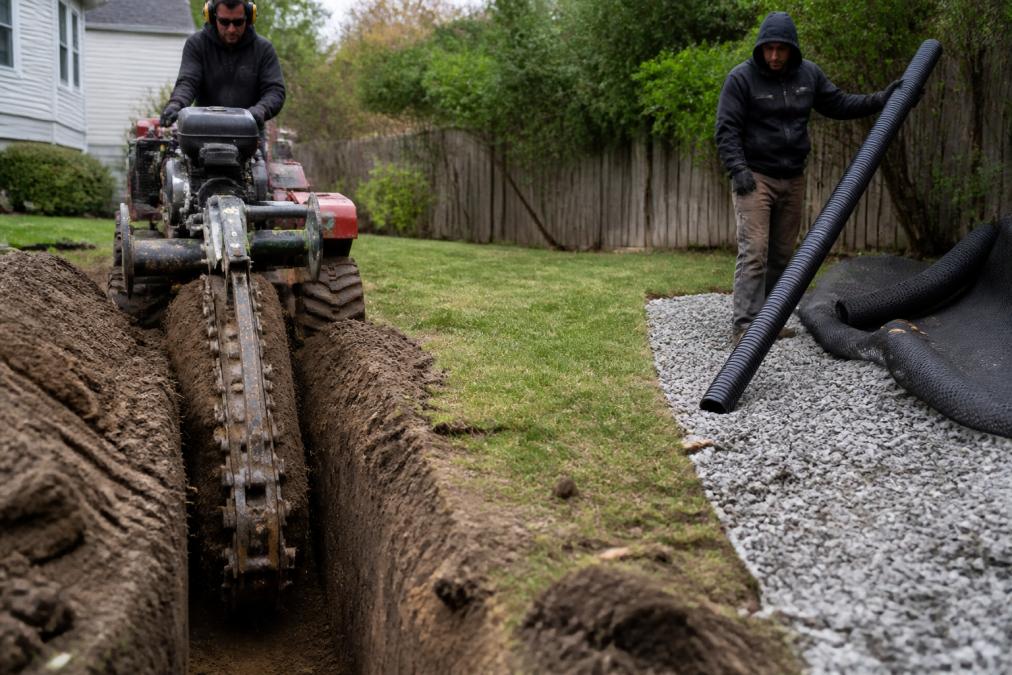
The trench must be dug to correct depth (typically 0.75 to 1.2 meters) and at a slight slope to encourage water flow. Improper grading leads to standing water and system failure. Manual excavation is slower but more controlled in tight spaces; mechanical trenchers speed larger properties. A 30-meter trench takes most of a day to excavate properly.
Step 3: Perforated pipe and geotextile installation
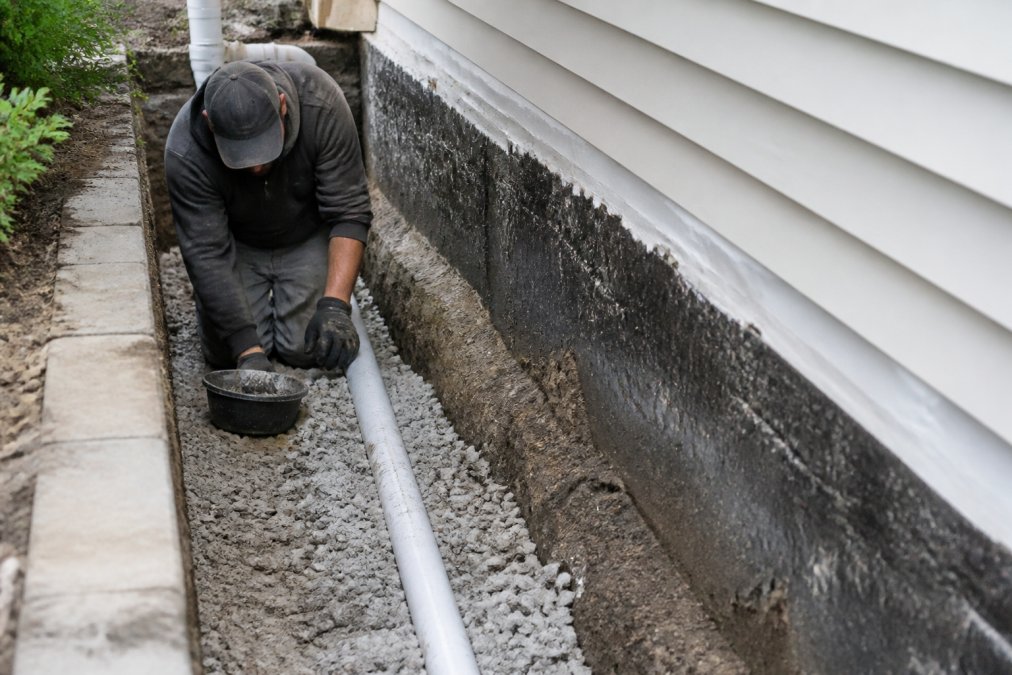
Perforated pipe is laid at the bottom to collect water. Geotextile fabric prevents soil from clogging perforations. Aggregate gravel (15 to 30 centimeters) is added around the pipe to create a drainage pathway and prevent soil compaction. Proper placement prevents future clogs and system failure.
Step 4: Backfilling and landscape restoration
The trench is backfilled in layers and compacted properly to prevent settling. Landscape restoration includes regrading, replacing topsoil, and replanting. Most yards stabilize within a few weeks.
Interior vs. Exterior Drain Systems: Timeline Differences
Exterior drains are installed around the foundation perimeter, requiring extensive excavation but keeping the basement undisturbed. Exterior installation typically takes 2-3 days. Interior drains are installed inside the basement along the perimeter, avoiding exterior excavation but requiring concrete cutting. Interior installation takes 2-5 days depending on basement size and floor conditions. The choice depends on property layout, budget, and basement condition.
Perimeter Drain Installation Cost and Budget Planning
Basement drain installation averages $40-$85 per linear meter. Interior systems cost more than exterior systems due to concrete cutting. Labor costs dominate the budget. Professional installation ensures proper grading, compaction, and system function. Budget a contingency for unexpected conditions like rock, poor soil, or utility conflicts.
Wet Basement Remediation Timeline and Recovery
Standing water must be pumped out and the space dried before drainage work begins, adding 1-3 days. After installation, the basement needs time to dry fully; dehumidifiers speed the process. Full recovery typically takes 1-2 months, proving the system works under real-world conditions.
Tools, Materials, and Labor Requirements
Essential materials:
- Perforated drain pipe (typically 10 cm diameter PVC or corrugated)
- Geotextile fabric (prevents soil clogging)
- Aggregate gravel (creates drainage pathway, typically 15 to 30 cm depth)
- Sump pump (if interior system or high water table)
- Backfill soil and topsoil for restoration
Equipment and excavation methods:
Equipment choice is the primary factor determining how fast trenching happens. The choice between manual digging and mechanical trenching affects both timeline and cost.
Manual excavation is slower but more controlled, especially in tight spaces or near existing structures. Experienced crews with hand tools (shovels, pickaxes, wheelbarrows) typically excavate 5 to 8 linear meters per day depending on soil type. Manual work is necessary in confined areas like narrow side yards or around pools and decks where a trencher can't fit. The advantage is precision and minimal property disruption. The disadvantage is time: a 30-meter drain by hand takes 3 to 7 days of labor alone, before pipe installation and backfilling.
Walk-behind trenchers (compact mechanical trenchers) cut trenches 7 to 15 centimeters wide at 18 to 30 linear meters per hour on ideal soil.
Comparison: Manual vs. mechanical impact on timeline
- 15-meter drain: Manual takes 2-3 days; walk-behind trencher takes 1 day (including setup)
- 30-meter drain: Manual takes 4-7 days; walk-behind trencher takes 1-2 days
- 45+ meter drain: Manual becomes impractical; mechanical trencher or excavator saves 3-5 days
Labor requirements and crew size:
Why professional installation is faster:
Permits and Utility Line Marking: Do They Delay Installation
Permits are required in most jurisdictions before drainage work begins. The permit process adds time before your project can start.
| Project Type |
|---|
| Exterior 10-15 meter drain |
| 1 day |
| Simple, accessible properties |
| Exterior 15-30 meter drain |
| 2-3 days |
| Standard residential perimeter |
| Interior basement drain |
| 2-5 days |
| Finished basements, tight spaces |
| Complex/large project |
| 5+ days |
| Multiple issues, poor soil, obstacles |
Frequently Asked Questions
How long does drain tile installation process typically take for a residential property?
A typical residential drain tile installation takes 1 to 3 days. A straightforward exterior drain covering 10 to 15 meters can be completed in one day by two experienced workers, while longer runs or interior basement systems may extend to 2-3 days. Complex projects involving difficult soil conditions or extensive excavation may require longer timelines. The actual duration depends on project scope, site accessibility, and weather conditions.
What factors most influence the duration of drain installation?
Soil composition, trench depth, project scale, equipment availability, weather, and site accessibility are the primary factors. Clay or compacted soil requires more labor-intensive excavation than sandy soil. Larger projects spanning 30+ meters naturally take longer. Equipment rental efficiency also matters: mechanical trenchers complete work faster than manual labor. Weather delays, permits, and utility line marking can add 1-2 days to the overall timeline.
Does wet basement remediation timeline differ from standard drain installation?
Yes. Wet basement remediation may involve interior drain installation, sump pump integration, and foundation waterproofing, extending the timeline to 2-5 days depending on complexity. Interior systems require careful excavation around foundation footings and may need concrete cutting. Post-installation settling typically requires 7-14 days before the system reaches full operational efficiency, during which ground saturation gradually decreases.
What permits or utility marking requirements might delay my drain installation?
Before excavation, you must call 811 to mark underground utility lines, a process that typically takes 2-5 business days. Some municipalities require drainage permits, adding another 3-7 days to the timeline. Professional contractors handle these steps, but planning ahead prevents unexpected delays. Always confirm permit requirements and utility marking completion before scheduling installation work.