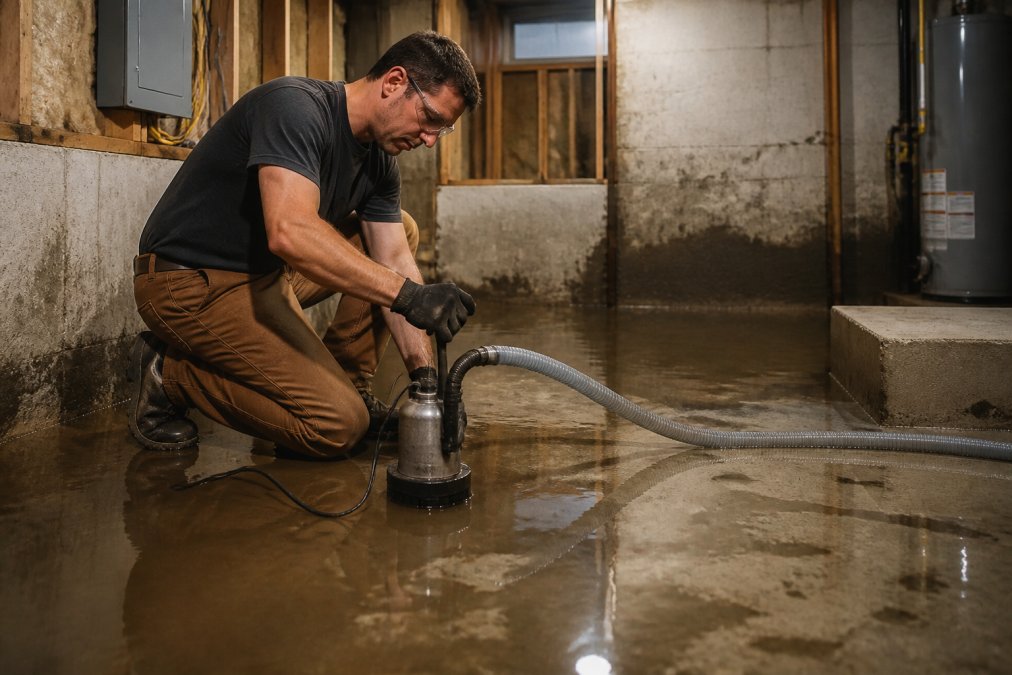
 how-to
Emergency Basement Waterproofing: A 2026 Guide
Table of Contents
- What Constitutes an Emergency Basement Waterproofing Situation
- Immediate Actions During a Basement Flood
- Basement Flood Cleanup Services: What to Expect
- Interior vs. Exterior Waterproofing for Emergency Response
- Emergency Waterproofing Services: Availability and Response
- Preventing Future Emergencies: Structural Assessment and Maintenance
- Frequently Asked Questions
Last Updated: September 23, 2026
What Constitutes an Emergency Basement Waterproofing Situation
Emergency basement waterproofing addresses urgent water intrusion that threatens your home's structural integrity and safety. The distinction between a manageable moisture problem and a true emergency comes down to speed, scale, and risk. Waiting costs more than acting fast.
Signs Your Basement Needs Immediate Attention
Water pooling on the floor, active seepage through foundation cracks, or visible mold growth are red flags. Cracks wider than a few millimeters that leak during heavy rain need professional assessment within days, not weeks. Real urgency appears when water enters during normal rainfall, not just storms; this means grading and drainage are failing, and prolonged moisture exposure weakens concrete.
When DIY Stops and Professional Help Begins
You can bail water and run a dehumidifier yourself. You cannot diagnose the water source or repair structural damage safely. According to Perma-Dry Waterproofing's emergency guidance, improper emergency response can actually worsen structural failure by driving water deeper into the foundation or creating new pathways for seepage. Stop trying to fix active water entry alone. Professional contractors assess the water source and identify whether the problem is grading, a failed weeping tile, a cracked foundation, or a compromised sump pump system. DIY patches won't stop structural leaks and can trap water inside concrete, accelerating deterioration.
Immediate Actions During a Basement Flood
Your first 60 minutes determine whether this becomes contained or cascading. The sequence matters: safety assessment, electrical shutdown, water containment, and damage documentation.
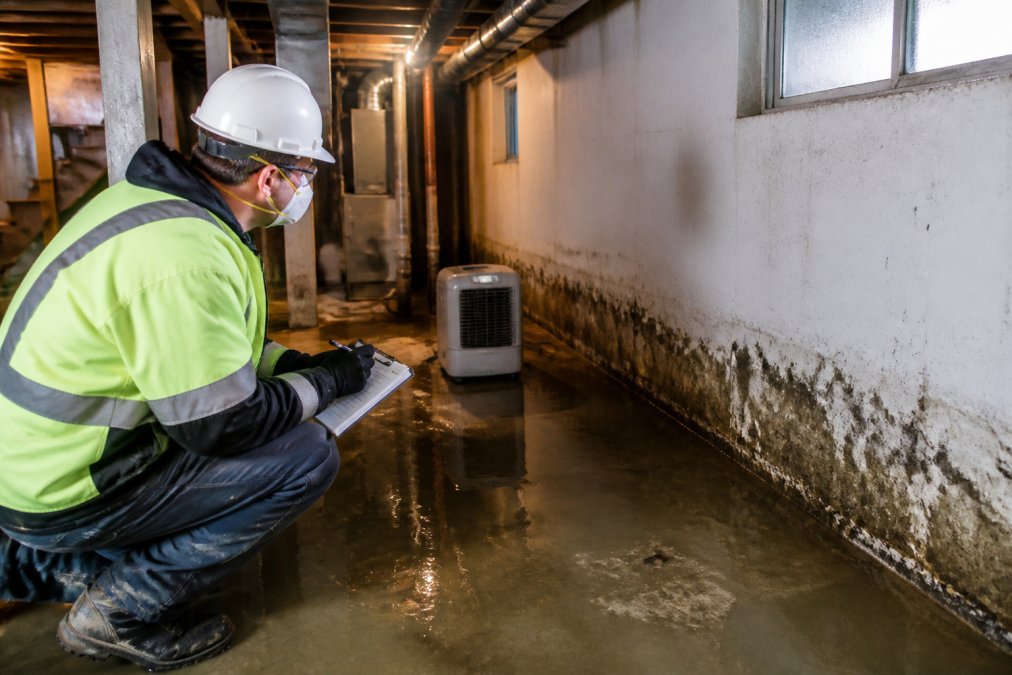
Minutes 0-5: Safety Assessment and Electrical Shutdown
Before entering, assess visible hazards from the top of the stairs:
- Water level relative to electrical outlets (if above the lowest outlet, assume all circuits below are live)
- Visible foundation cracks, bowing walls, or sagging ceilings
- Sewage smell (indicates sewer backup; do not enter without respiratory protection)
If any of these are present, do not enter. Call emergency services or a professional water removal contractor. If safe, turn off the main electrical breaker immediately. If you cannot safely reach it, turn off power to the entire house. Floodwater conducts electricity; any live circuit creates electrocution risk. Wear rubber boots and heavy-duty gloves. Assume all standing water is contaminated.
Minutes 5-15: Water Source Identification and Containment
Identify where water is entering:
- Foundation wall seepage: Water weeping through concrete or visible cracks
- Floor-wall seam: Water entering where foundation floor meets wall (most common)
- Floor cracks: Water rising through concrete
- Sump pump failure: Water pooling near sump pit
- Sewer backup: Water with visible sewage from floor drains
Take photos from multiple angles for your insurance adjuster. Redirect active flow away from electrical panels, furnaces, and water heaters to the lowest point where it can be pumped out.
Minutes 15-30: Water Removal Setup and Dehumidification
Remove standing water using a rented submersible pump ($40-$80/day) or call a professional service. Do not use your household sump pump; it will burn out. Pump water at least 3 meters from the house. Open all basement windows and doors for ventilation. Set up box fans and dehumidifiers with exhaust directed outside. Moisture trapped in materials fuels mold growth within 24 hours. If you lack equipment, call a professional water removal service. Response time is typically 2-4 hours in urban areas.
Minutes 30-60: Damage Documentation for Insurance
Document everything with photos and video:
- Wide shots showing water depth and extent
- Close-ups of water entry points
- Photos of damaged items and wet materials
Write down the exact time water was first noticed, weather conditions, and any recent maintenance changes. This timeline is crucial for your claim. Document serial numbers, purchase dates, and condition of all appliances and stored items. Contact your insurance company within 24 hours with photos, video, timeline, and damaged item list. Do not discard materials until your adjuster inspects them.
When to Call a Professional Water Removal Service
Call immediately if water depth exceeds 15 centimeters, water is actively flowing, you smell sewage, you cannot safely access the electrical panel, or water has been present for more than 2 hours. Professional services cost $1,500-$3,500 and prevent mold remediation costs exceeding $5,000.
Basement Flood Cleanup Services: What to Expect
Professional cleanup services handle water extraction, structural drying, mold assessment, and material removal. They bring industrial-grade equipment that residential dehumidifiers cannot match. According to The Basement Guide's 2026 cleanup cost analysis, professional water damage restoration typically starts at $3,000 and scales with the affected area. The cleanup process takes 3-7 days depending on water volume and foundation condition. Contractors will assess whether the water damage has created conditions for mold (anything over 48 hours of moisture exposure is high-risk). They'll also inspect your foundation for new cracks or structural shifts caused by water pressure.
Interior vs. Exterior Waterproofing for Emergency Response
When your basement is actively leaking, you need to choose between interior and exterior solutions. Both work, but they address the problem differently and have different timelines. Interior waterproofing stops water after it enters your basement. You install a drainage system along the interior perimeter, often paired with a sump pump. Water is collected and pumped out before it can damage your foundation or contents. Interior solutions are faster to install (days instead of weeks) and cost less upfront, but they don't stop hydrostatic pressure from pushing against your foundation walls. Exterior waterproofing prevents water from reaching your foundation in the first place. This involves excavation, membrane installation, weeping tile repair or replacement, and grading correction. It's the permanent solution but requires significant disruption and higher initial investment. For emergency response, interior systems buy you time while you plan a long-term exterior solution. Many homeowners install interior drainage first to stop the immediate leak, then schedule exterior work for the following season.
Interior Drainage Systems and Sump Pump Installation Services
An interior drainage system is a perimeter channel cut along your basement floor that collects water seeping through the foundation. The channel connects to a sump pit where a pump removes water before it pools. This is the fastest emergency fix and works regardless of your exterior grading condition. Sump pump installation is straightforward: a pit is dug at the lowest point, a pump is installed with battery backup, and discharge lines run away from the foundation. Battery backup is essential; it keeps the pump running during power outages, which often occur during heavy storms. According to MyQuoteIQ's 2026 contractor benchmarks, most basement waterproofing contractors can complete interior drainage installation within 2-3 days.
Exterior Solutions and Cost of Exterior Basement Waterproofing per Foot
Exterior waterproofing involves excavating around your foundation, installing an exterior membrane, and often replacing or installing weeping tile. Grading is corrected so water slopes away from the house. This approach eliminates the water source rather than managing it after entry.
Emergency Waterproofing Services: Availability and Response
True emergency basement waterproofing services operate on your timeline, not a standard business schedule. When water is actively entering your basement, waiting until Monday is not an option.
24/7 Emergency Response and Free Inspections
DrainageBusters provides emergency response for active basement leaks. We diagnose the water source and recommend immediate containment steps while you plan permanent repairs.
Insurance Claims and Professional Documentation
Insurance claims for water damage require professional documentation. Contractors provide detailed reports showing the damage extent, the cause of water intrusion, and the repair scope. This documentation is essential for your claim approval.
Preventing Future Emergencies: Structural Assessment and Maintenance
After you've stopped the immediate leak, prevention keeps it from happening again. This means understanding your foundation condition, your drainage system, and your grading.
| Service Type | Timeline | Best For | Key Benefit |
|---|---|---|---|
| Interior Drainage System | 2-3 days | Active leaks, immediate relief | Fast installation, lower cost |
| Sump Pump Installation | 1-2 days | Ongoing water management | Automatic water removal |
| Exterior Waterproofing | 1-2 weeks | Permanent solution | Eliminates water source |
| Structural Assessment | 1-2 hours | Diagnosis and planning | Identifies root cause |
Frequently Asked Questions
What are the first steps to take during a basement flood?
Turn off electricity at the main breaker if water is rising, then exit the basement immediately. Once safe, call a professional emergency waterproofing service for assessment. Document all damage with photos for insurance. Do not attempt to remove standing water yourself; professionals have equipment to handle contamination and structural risks. Most emergency services offer 24/7 response to prevent further damage and mold growth.
How much does emergency basement waterproofing cost?
Professional emergency waterproofing costs vary based on damage extent, water source, and required solutions. Interior drainage systems, exterior membranes, and sump pump installation affect final pricing. Contact DrainageBusters for a free inspection and an estimate tailored to your specific situation.
Does home insurance cover emergency basement waterproofing?
Coverage depends on your policy and the water source. Sudden, accidental water damage (burst pipes, heavy storms) is often covered, but gradual seepage or foundation cracks typically are not. Flood insurance is separate and required in high-risk areas. Professional contractors can document damage and provide detailed reports to support insurance claims. DrainageBusters provides free inspections and documentation to help you navigate the claims process.
What is the difference between interior and exterior emergency waterproofing?
Interior systems (sump pumps, weeping tile) manage water that has already entered the basement, preventing damage and mold. Exterior solutions (membrane application, excavation, grading) stop water before it reaches the foundation. Emergency situations often require interior intervention first to remove standing water, then exterior work to prevent recurrence. A professional assessment determines which approach, or combination, your foundation needs to prevent future emergencies.